


Blog
Nvidia Stock: How NVDA’s AI Boom, Global Reach and Earnings Report Are Shaping Markets

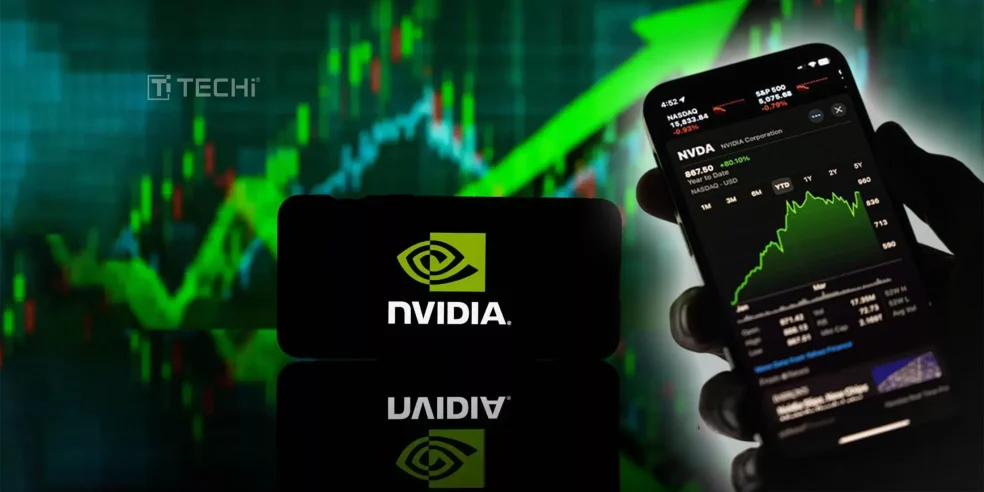
1. What Is Nvidia?
Nvidia Stock:- Nvidia Corporation (NVDA) is a leading American technology company that specializes in graphics processing units (GPUs), AI hardware, and accelerated computing platforms. Founded in 1993 by Jensen Huang, Chris Malachowsky, and Curtis Priem, Nvidia has grown from a graphics card manufacturer to a global leader in artificial intelligence, gaming, and data center technology.
1.1 Core Business Segments
- Gaming: Nvidia’s GPUs power high-end gaming experiences, including GeForce RTX series graphics cards.
- Data Centers: AI-driven servers and accelerators used by cloud providers, research institutions, and corporations.
- Professional Visualization: GPUs for content creation, simulation, and design applications.
- Automotive: AI solutions for self-driving cars and in-vehicle infotainment systems.
1.2 Importance in the AI Revolution
- Nvidia’s technology is central to training and running AI models, making it a cornerstone of the AI boom.
- The company’s GPUs and AI platforms enable machine learning, generative AI, and large language models, driving demand globally.
- Analysts often view Nvidia’s stock performance as a market signal for the AI sector and broader tech investment trends.
1.3 Global Reach and Market Position
- Nvidia’s products are used worldwide, giving it a strong presence in multiple markets including North America, Europe, and Asia.
- The company is a key player in semiconductors, and its stock is heavily tracked on the NASDAQ under the ticker NVDA.
- Nvidia’s market moves can influence AI-focused ETFs, semiconductor indexes, and global tech stocks, reflecting its outsized role in modern technology markets.
1.4 Why Investors Follow Nvidia Closely
- Nvidia is not just a gaming or hardware company; it’s an AI infrastructure powerhouse, meaning its earnings, guidance, and technological announcements are watched closely by investors worldwide.
- Movements in Nvidia’s stock can create “pop” effects in the tech market, particularly in AI-related companies, due to its leadership role.
Key Takeaways
- Nvidia (NVDA) is a global leader in GPUs and AI technology.
- Its products power gaming, data centers, AI, and automotive innovations.
- Investors follow Nvidia closely as its performance serves as a bellwether for AI and tech markets worldwide.

2. Nvidia Stock Price & Market Position
NVIDIA Corp (NVDA)
$187.90
+$1.38(+0.74%)Today1D5D1M6MYTD1Y5Ymax
Open195.98
Volume157.8M
Day Low186.90
Day High197.42
Year Low86.62
Year High212.19
2. Nvidia Stock Price & Market Position
2.1 Current Stock Metrics
- Nvidia Corporation (ticker: NVDA) is currently trading around US $187.90 per share. NVIDIA Investor Relations+1
- Its market capitalization is approximately US $4.4 trillion to US $4.5 trillion. MarketWatch+1
- The company’s price‑to‑earnings (P/E) ratio sits in the 50× range, which reflects high investor expectations. Perplexity AI+1
2.2 Why This Matters
- With a valuation in the multi‑trillion‑dollar range, Nvidia is not just a large company—it’s among the largest publicly traded firms globally. Wikipedia+1
- Its position means that any material change in Nvidia’s performance or outlook can influence broader markets, especially in tech and AI‑hardware sectors.
- Its role in AI infrastructure, data‑centres, gaming, and semiconductors makes NVDA a bellwether stock for emerging themes like artificial intelligence, cloud computing, and global tech investment.
2.3 Market Position & Industry Leadership
- Nvidia dominates the high‑end GPU and AI accelerator market. It’s widely regarded as a key player behind the AI revolution, providing the hardware backbone for machine learning, generative AI, and large data‑centre builds. Wikipedia+1
- The company’s global footprint—spanning gaming, professional visualization, automotive, data centres—gives it a diversified yet focused presence.
- Given its size and influence, Nvidia’s success and challenges aren’t just about the company—they reflect wider technological and macroeconomic shifts, including export controls, supply‑chain risks, and AI infrastructure spending.
2.4 Investor Considerations
- Valuation premium: Because many investors are buying Nvidia as a bet on future growth (particularly AI), the stock trades at a high premium compared to more traditional companies.
- Risk exposure: With such a high valuation, Nvidia is more exposed to disappointment in growth, guidance shortfalls, or macro‑headwinds.
- Market‑signal effect: A strong or weak earnings report from Nvidia often triggers ripple effects—in AI‑hardware peers, semiconductor supply‑chain names, and tech indices.
- Global/geopolitical sensitivity: Given Nvidia’s global operations and role in AI hardware, issues like export restrictions (e.g., to China) or rising competition can affect both earnings and sentiment.
Key Takeaways
- NVIDIA’s stock price and market position reflect both its massive scale and its role as an indicator of the AI/tech economy.
- Its current valuation suggests that the market is pricing in significant future growth, not just current earnings.
- Investors should view NVDA not just as a tech stock but as a macro/structural play—where company‑specific results, guidance, and global trends all matter.
- Because it is so large, even modest guidance changes can lead to large stock‑price moves, making it both an opportunity and a high‑stakes position.
3. Nvidia Earnings Report: What Happened?
3.1 Key Financial Highlights
- Nvidia reported record revenue of approximately US $57.0 billion for the quarter ended October 26, 2025 — up ~62% year‑over‑year and 22% quarter‑over‑quarter. NVIDIA Investor Relations+2Reuters+2
- Earnings per share (diluted) came in at about US $1.30 — beating analysts’ expectations (which were around US $1.26). Investopedia+1
- The data‑center business delivered a standout performance: revenue of US $51.2 billion, up ~66% year‑over‑year. NVIDIA Investor Relations+2Investing.com+2
- Gaming revenue and other segments also posted growth: gaming rose ~30% year‑over‑year to about US $4.3 billion. NVIDIA Investor Relations+1
- Gross margin remained strong at ~73.4% (GAAP) for the quarter. NVIDIA Investor Relations
3.2 Strategic & Qualitative Highlights
- Nvidia indicated that its latest AI‑server chips — including the “Blackwell” architecture — are in high demand. In the earnings call CEO Jensen Huang said “Blackwell sales are off the charts, and cloud GPUs are sold out.” NVIDIA Investor Relations+1
- The company issued strong forward guidance: for the next quarter, it expects revenue around US $65.0 billion, plus or minus ~2%. NVIDIA Investor Relations+1
- Nvidia reinforced its role not just as a supplier but as a key global infrastructure player in AI, data‑centres, and accelerated computing. NVIDIA Investor Relations+1
3.3 Market Reaction & Significance
- Following the results and forward guidance, Nvidia’s stock saw a positive bump in after‑hours trading, reflecting investor confidence. Investopedia+1
- The earnings report helped calm some concerns about an “AI bubble” — since Nvidia is often seen as a bellwether for the broader AI/tech sector. Reuters+1
3.4 Why This Matters
- Because Nvidia’s business is so central to AI infrastructure (GPUs, data‑centres, etc.), its strong performance signals that the AI hardware build‑out remains intact and is not flashing red.
- The massive increase in data‑centre revenue indicates that major tech companies are ramping up AI compute investment — which has broader implications for semiconductors, cloud, and global tech supply chains.
- Forward guidance (US $65B next quarter) sets high expectations — and that means Nvidia is both in a strong position, but also under scrutiny: any miss in future guidance or slowdown in demand could have outsized impact.
3.5 Risks & Watch‑Points
- High expectations = higher risk: With strong results now priced in, future guidance or slower growth could cause the stock to be more sensitive.
- Supply chain / geopolitical factors: Nvidia mentioned some constraints (for instance with exports) that could affect growth long‑term. Investing.com
- Valuation: Given its dominant position and growth premium, many investors will be watching whether Nvidia can sustain this growth rate or whether it starts to normalize.
- Broad AI/tech sentiment: Although Nvidia delivered, the broader theme of AI investing is still being evaluated for sustainability — Nvidia’s performance may not guarantee smooth sailing for all AI‑related stocks.
Key Takeaways
- Nvidia’s Q3 results were very strong, beating on revenue and EPS, with major growth in the data‑centre segment.
- Forward guidance is ambitious, which means the company is projecting continued strength in AI infrastructure.
- For the market, Nvidia’s performance is more than just one company: it acts as a signal for AI investment, semiconductor health, and tech‑hardware demand globally.
- Investors should be excited, but also mindful of the elevated expectations and potential execution risks.

4. Why This Matters: The AI and Global Market Context
Nvidia’s performance is not only critical for its shareholders but also serves as a barometer for the global AI and technology market. Its earnings report has wide-ranging implications for AI adoption, semiconductor demand, and investor sentiment in tech sectors worldwide.
4.1 AI Infrastructure: A Global Demand Signal
- Nvidia’s GPUs power the backbone of AI compute, including large language models, generative AI platforms, and enterprise AI applications.
- The strong performance of its data-center and AI chips indicates that demand for AI infrastructure is robust and not just speculative hype.
- Analysts interpret Nvidia’s results as a confirmation that the AI boom is real, giving investors confidence in AI-focused ETFs and tech indices. (ft.com)
4.2 Global Market Influence
- Nvidia operates worldwide, making it a key player in global technology supply chains.
- Its earnings and guidance impact not only the U.S. stock market but also international markets where AI adoption is accelerating.
- Investors use Nvidia as a sentiment indicator for other semiconductor companies, cloud computing firms, and AI startups.
4.3 The AI Bubble Debate
- Despite fears of an AI “bubble,” Nvidia’s Q3 results calmed market anxieties, as revenue growth and forward guidance exceeded expectations.
- CEO Jensen Huang emphasized that Nvidia is excelling “at every phase of AI,” signaling sustained, structural demand rather than short-term hype. (theguardian.com)
4.4 Geopolitical and Supply Chain Considerations
- Export restrictions, particularly on advanced AI chips to China, pose a potential headwind for Nvidia’s global expansion.
- Supply chain resilience and global partnerships are crucial as Nvidia continues to scale AI infrastructure worldwide.
- Analysts watch how these factors affect revenue projections and market sentiment.
4.5 Macro and Market Implications
- Nvidia’s strong earnings influence NASDAQ futures, semiconductor ETFs, and AI-related technology stocks.
- A positive report tends to create a “pop” in the market, boosting investor confidence in tech and AI sectors.
- Conversely, any shortfall in guidance could trigger a broader market pullback due to Nvidia’s market signaling effect.
Key Takeaways
- Nvidia’s performance is a leading indicator of the AI sector’s health.
- Its results reinforce global confidence in AI infrastructure investment and adoption.
- Investors closely monitor Nvidia for both company-specific growth and broader market sentiment, given its central role in AI and technology globally.
5. What Investors Are Watching Now
5.1 Forward Guidance & Margins
- One of the biggest focal points: Nvidia’s guidance for the next quarter. The company expects approximately US $65.0 billion in revenue for Q4 of fiscal 2026. NVIDIA Investor Relations
- Closely tied to that is the gross margin outlook, aiming for around 74.8% (GAAP) and ~75% non‑GAAP. NVIDIA Investor Relations+1
- Investors will watch if these expectations are met or missed. A miss, even slightly, could challenge the high valuation.
5.2 Data‑Centre Growth & AI Infrastructure
- The data‑centre segment was a standout in Q3: revenue of about US $51.2 billion, up ~66% year‑over‑year. NVIDIA Investor Relations+1
- Nvidia’s leadership in AI chips (e.g., its “Blackwell” architecture) is seen as a key driver: “Blackwell sales are off the charts, and cloud GPUs are sold out,” said CEO Jensen Huang. NVIDIA Investor Relations
- Investors will be looking for signs that this demand is sustainable and not just temporary.
5.3 Customer Concentration & Geopolitical Risk
- Approximately 61% of revenue came from just four major customers in the recent quarter. Reuters
- That customer concentration means that if any of those customers slow spending, Nvidia could be exposed.
- Also, Nvidia is affected by geopolitical issues — e.g., export controls to China, investigations by China’s antitrust authority. MarketWatch
- Investors are keeping a very close eye on how Nvidia navigates these external headwinds.
5.4 Valuation & Risk of Over‑Expectations
- Because Nvidia is seen as the bellwether for AI infrastructure, its stock price already reflects aggressive growth assumptions.
- If future quarters show any sign of deceleration, the market could react harshly — the risk of a “pop” is high, but so is the risk of a “pull‑back”.
- For example, some analysts note the “AI boom” story is still debated, and Nvidia’s results helped calm those fears — but calm doesn’t mean that concerns are gone. Reuters
5.5 Technical / Market Flow Considerations
- Investors also track after‑hours and premarket movement of NVDA — since earnings results often trigger sharp moves outside regular trading hours.
- Sentiment is also influenced by broader indices and tech flows. When Nvidia performs well, it often lifts semiconductor peers and AI‑sector names. When it stumbles, it can drag them too.
- Given Nvidia’s size and prominence, its result can impact NASDAQ futures and overall tech sector mood.
5.6 Strategic Partnerships & Product Roadmap
- Also high on the watch list: key partnerships (e.g., with hyperscalers, cloud providers) and product releases (next‑gen GPUs, AI accelerators) that can drive growth.
- Investors are asking: Is Nvidia merely riding the AI wave, or is it shaping it? Its roadmap and partner announcements give clues.
- For example, its large investment in AI infrastructure and announcement of new architectures show ambition — but also require execution.
Key Takeaways for Investors
- Nvidia’s recent earnings were strong, but what matters now is the forward path — guidance, margins, and demand sustainability.
- The company is at the intersection of multiple trends (AI, data‑centre build‑out, global semiconductor demand), which offers high upside, but also higher risk.
- External risks (geopolitical, regulatory, customer concentration) are significant and must be factored into any investment view.
- For those tracking NVDA, it’s less about the past quarter and more about the next quarters, the roadmap, and how much growth is already priced in.

6. Risk Factors and Considerations
While Nvidia (NVDA) continues to dominate the AI, gaming, and data-center markets, investors must be aware of several risk factors and considerations that could impact the company’s stock performance and long-term growth.
6.1 High Valuation and Market Expectations
- Nvidia trades at a premium valuation relative to most semiconductor peers due to its AI growth potential.
- This high valuation means investor expectations are extremely elevated. Any minor miss in earnings, guidance, or product adoption can trigger significant stock volatility.
- Analysts caution that Nvidia’s stock already prices in future AI growth, leaving little margin for error.
6.2 Geopolitical Risks
- Nvidia’s global operations make it sensitive to international trade policies.
- Export restrictions, especially to China (one of the largest markets for AI chips), could limit growth and revenue.
- Regulatory scrutiny, such as antitrust investigations or government-imposed tariffs, can also affect profitability and investor sentiment.
6.3 Customer Concentration
- A significant portion of Nvidia’s revenue comes from a few major customers, particularly large cloud providers and data-center operators.
- Heavy reliance on these clients increases exposure to demand fluctuations from a small number of buyers.
6.4 Supply Chain and Manufacturing Constraints
- Advanced GPU manufacturing depends on cutting-edge semiconductor fabrication, often outsourced to partners like TSMC.
- Any supply chain disruption, production delays, or yield issues can impact revenue, especially during periods of high demand for AI hardware.
6.5 Competitive Pressure
- Nvidia faces competition from companies like AMD, Intel, and emerging AI chip startups.
- While Nvidia is currently leading, competitors may develop alternative solutions that could erode market share or pricing power.
6.6 Macroeconomic and Market Risks
- Economic downturns, rising interest rates, or global tech sell-offs can impact Nvidia’s stock performance, despite strong fundamentals.
- Nvidia’s stock often acts as a bellwether for AI and semiconductor trends, so broader market volatility can amplify stock swings.
6.7 Execution and Technological Risk
- Nvidia’s growth relies on successful execution of its roadmap, including new GPU architectures and AI-focused chips.
- Any delay or underperformance in product launches can negatively affect market confidence and future earnings.
7. Nvidia vs. Other Stocks: A Comparative View
In the rapidly evolving AI and semiconductor landscape, investors don’t look at Nvidia (NVDA) in isolation — it’s often compared with other major players like AMD and Intel, each of which presents distinct opportunities and risks. Here’s how Nvidia stacks up.
7.1 Nvidia vs AMD
Market Focus and Strengths
- Nvidia is the dominant force in AI-centric GPUs. According to analysts, Nvidia continues to lead because of its extensive data-center presence and the strength of its CUDA software ecosystem. The Motley Fool+2Forbes+2
- AMD, on the other hand, offers a more diversified portfolio — not just GPUs, but also CPUs (EPYC) and data-center accelerators. Nasdaq+1
- AMD is pushing into AI with its MI300 series and emphasizes open-source software (ROCm), which appeals to developers who prefer flexibility over proprietary ecosystems. Forbes+1
Competitive Challenges
- While AMD is growing, many analysts believe it is still playing catch-up to Nvidia’s performance lead, particularly in high-performance data-center workloads. The Motley Fool+1
- AMD warns that Nvidia’s rapid innovation and strong ecosystem make competition difficult, especially as Nvidia pairs with Intel to deepen its AI infrastructure footprint. AInvest
- The proprietary nature of Nvidia’s CUDA remains a major moat: many AI companies continue to standardize on Nvidia’s stack, giving it a strong competitive edge. Nasdaq+1
Valuation and Risk-Reward
- According to Forbes, Nvidia’s stock trades at a high multiple, reflecting not just current earnings but expected future growth in AI infrastructure. Forbes
- AMD, though growing, is also seen as riskier in some respects: its dependence on non‑Nvidia architecture means it must aggressively execute to gain meaningful market share. Nasdaq
7.2 Nvidia vs Intel
Strategic Shift in Competition
- Intel, historically dominant in CPUs, is pushing into AI accelerators. According to some reports, Intel and Nvidia recently announced a $5 billion partnership, signaling a new phase of cooperation and competition. Reuters+1
- Intel aims to use its manufacturing strength to deliver efficient AI chips, potentially challenging Nvidia in certain segments. Investing.com India+1
Strengths & Weaknesses
- Intel’s strength lies in its existing scale, IP, and manufacturing, but it has to catch up to Nvidia in performance for AI workloads. Forbes+1
- Meanwhile, Nvidia’s GPU‑centric architecture remains more optimized for modern AI training and inference than Intel’s more general-purpose chips.
Market Implications
- The Nvidia‑Intel collaboration could reshape parts of the semiconductor ecosystem: combining Nvidia’s compute with Intel’s distribution and manufacturing could drive new types of AI data‑center solutions. AInvest
- For investors, this partnership could represent both opportunity and risk: Nvidia strengthens its infrastructure reach, but Intel becomes a more meaningful partner — and potential long-term rival.
7.3 Other Emerging Competitors
- Beyond AMD and Intel, other players like Cerebras are building wafer-scale AI accelerators. Though niche today, such companies could become more important as AI workloads diversify. arXiv
- Academic research shows that emerging AI accelerators may offer trade-offs in performance vs energy efficiency, but software compatibility and ecosystem maturity remain major hurdles for competing with Nvidia.
8. What This Means for the Market Going Forward
- Nvidia’s strong guidance and earnings suggest that the AI infrastructure build‑out is entering a new phase, moving beyond hype into scale‑up.
- Because Nvidia is so central, its success may help sustain investor interest in AI, bolster semiconductor sector and influence global tech investment strategy.
- On the flip side, the risk remains: if Nvidia stumbles or guidance falters, many AI‑related stocks and ETFs could see sharp pull‑backs due to sentiment reversal.
9. How to Follow Nvidia Earnings and Stock Movements
- Be aware of official announcement timing: earnings press release, investor call (webcast), after‑hours / pre‑market reactions. NVIDIA Investor Relations+1
- Monitor after‑hours and pre‑market quotes for NVDA (“after hours stock price” and “premarket”).
- Read the earnings call commentary for strategic updates (e.g., chip roadmap, AI partnerships).
- Watch broader market indices and NASDAQ futures for how NVDA’s earnings influence sentiment.
- Keep an eye on news feeds (e.g., “nvidia news”, “nvda news”) for regulatory, geopolitical, or product‑pipeline developments.
- Use the company’s investor relations page for official data. NVIDIA Investor Relations
Conclusion
Nvidia (NVDA) stands at the epicenter of the AI infrastructure revolution. Its recent earnings report not only delivered strong current performance but also offered a compelling outlook, calming concerns of an AI bubble and igniting investor optimism. For those tracking “nvidia stock”, “nvda earnings report”, and the broader market signals tied to AI, Nvidia remains a key focus.
Yet, high expectations and the complexities of global tech mean risks remain. Investors and observers should treat NVDA both as a growth opportunity and a market signal – paying attention to earnings, guidance, and broader AI/tech trends.
SEO‑Friendly Tags (with commas)
nvidia stock, nvidia stock earnings report, nvda, nvda stock, ai, open, nvidia earnings report, global, pop, market, nvidia nvda earnings report, signal, nvidia earnings call, nvidia earnings report today, nvda after hours, nvda earnings call, nvidia news, nvda earnings time, nasdaq futures, nvda premarket, nvidia stock price, nvidia stock earnings, nvdia stock, nvidia earnings live, nvidia after hours, $nvda, nvidia earning, what time does nvidia report earnings, nvidia after hours stock price, nvidia earnings, nvidia stock price today, nvda stock earnings, nvda news, nvidia share price, nvda stocktwits, nvda results, nvidia earnings report today time, nvda ticker, nvidia earnings release time, nvida earnings, nvidia report, nividia earnings
Discover more from Mithu Tech Group
Subscribe to get the latest posts sent to your email.