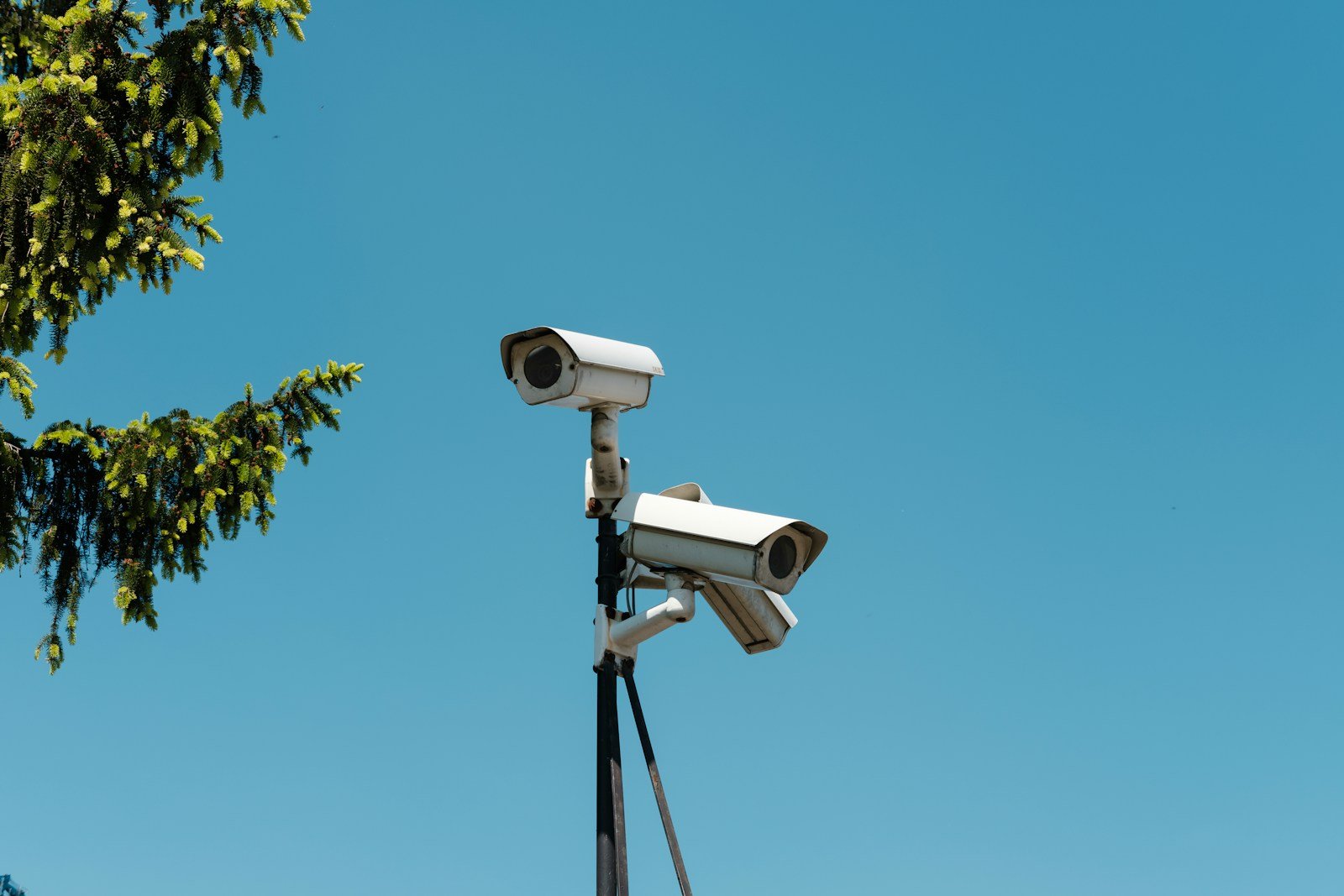
Choosing the right surveillance system is no longer simply a matter of buying a few cameras and fixing them on walls. A useful CCTV setup begins with understanding the property, identifying the areas that actually need protection, selecting suitable camera types, planning storage, securing the network, and installing every component so that the system remains reliable after the installer leaves. For homes, shops, offices, warehouses, schools, clinics and other properties in Durgapur, a properly planned CCTV system can make day-to-day monitoring much easier and can provide recorded footage when an incident needs to be reviewed.
This complete guide to CCTV installation in Durgapur explains the major decisions involved in a modern surveillance project. It covers camera selection, placement, DVR and NVR systems, PoE networking, storage, remote viewing, installation, maintenance, common mistakes, privacy considerations, and practical questions about cost. The aim is to help a property owner understand what should happen before approving a CCTV installation rather than choosing equipment only because a package looks inexpensive.
What Does CCTV Installation Actually Include?
CCTV installation is the complete process of designing and deploying a video surveillance system. Depending on the property, this can include a site survey, camera selection, mounting brackets, cabling, a DVR or NVR, hard-disk storage, power equipment, network configuration, mobile viewing, recording settings, testing and user training. A professional installation should also consider future maintenance and whether the system can be expanded later.
The cameras are only one part of the system. A camera may produce a sharp image, but poor cable routing, inadequate storage, unstable power, incorrect lens selection or a badly positioned recorder can still make the overall system disappointing. Good CCTV planning therefore treats the cameras, recorder, network, storage and physical installation as one connected system.
Why CCTV Is Useful for Homes and Businesses in Durgapur
Durgapur contains a mixture of residential neighbourhoods, markets, offices, educational institutions, industrial areas, warehouses and roadside commercial properties. Each environment has a different surveillance requirement. A small house may need a few cameras covering the entrance, parking area and rear side, while a warehouse may require wider coverage, longer recording retention and cameras designed for difficult lighting conditions.
For a business, CCTV can help owners review activity around entrances, cash counters, stock areas, reception desks, parking spaces and loading points. In a home, cameras can help residents check entrances, gates, driveways and other permitted outdoor areas. In both cases, the value of the system depends heavily on coverage and recording quality rather than on the camera count alone.
How to Choose the Right CCTV Camera
There is no single camera that is perfect for every location. The right choice depends on lighting, distance, mounting height, required detail, weather exposure, available cabling and the purpose of the camera.
1. Dome Cameras
Dome cameras are commonly used indoors and in locations where a compact appearance is desirable. Their shape can make the direction of the lens less obvious from a distance. They can be suitable for reception areas, corridors, shops, offices and other covered locations. Before selecting one, check whether the camera has the resolution, night performance and field of view required for the specific area.
2. Bullet Cameras
Bullet cameras are often selected for outdoor walls, gates, driveways and building perimeters. Their form factor makes them practical for directional coverage. When installing a bullet camera outside, the mounting height and angle should be planned carefully so that the camera does not point unnecessarily toward bright lights or large empty areas.
3. Turret Cameras
Turret cameras provide a compact alternative for many indoor and outdoor installations. They are often convenient to adjust during installation because the lens assembly can be positioned without the same type of enclosure used by traditional dome designs. The final choice should still be based on actual coverage and specifications rather than appearance alone.
4. PTZ Cameras
Pan-tilt-zoom cameras can move and zoom, making them useful for selected monitoring situations such as large premises. However, a PTZ camera should not automatically replace fixed cameras. A PTZ can be pointed away from an area at the moment an incident occurs, whereas a fixed camera continues to record its assigned view. For large sites, a combination of fixed cameras and PTZ equipment can sometimes make more sense.
5. IP Cameras
IP cameras send video over a network. They are often used with NVRs and can be especially useful when a project needs higher-resolution cameras, PoE networking, easier expansion or advanced network features. Proper network planning becomes important because every camera, switch, recorder and remote-access feature depends on a stable configuration.
6. Analog HD Cameras
Analog HD systems use coaxial video cabling and a DVR. They can be practical when an existing coaxial infrastructure is available or when a straightforward DVR architecture fits the project. The choice between analog HD and IP should be made according to the property, existing cabling, resolution requirements, budget and future expansion plans.
CCTV Camera Resolution: What Should You Buy?
Resolution is important, but a higher megapixel number does not automatically guarantee useful identification. Lens selection, lighting, camera placement, compression, viewing distance and the quality of the recorder all affect the final result.
For a general overview camera, moderate resolution may be sufficient. For a gate, billing counter or other location where facial or object details matter, the camera should be selected according to the distance between the lens and the target. A wide view that contains a large area may show an event but not enough detail to identify a person. In some situations, a narrower field of view with the camera positioned closer to the target provides more useful evidence.
How Many Cameras Does a Property Need?
Camera count should be based on coverage rather than a fixed package size. Start by drawing a simple plan of the property and marking entrances, exits, gates, parking areas, staircases, corridors, cash counters, storage rooms, server or equipment areas and other locations where monitoring is genuinely required.
Next, identify blind spots. A four-camera package is not automatically better than a three-camera system if the fourth camera is pointed at an empty wall while an important entrance remains uncovered. Conversely, reducing camera count only to save money can create gaps that defeat the purpose of the installation.
Recommended Camera Placement Principles
Camera placement is one of the most important parts of CCTV installation in Durgapur. A camera should be mounted high enough to reduce accidental interference while remaining useful for identification. It should not be aimed directly into strong sunlight or a powerful light source when that can be avoided.
At entrances, consider the direction from which people approach the door or gate. A camera positioned only above a person’s head may produce less useful facial detail than one installed at a suitable angle. For parking areas, consider vehicle movement, entry and exit lanes, lighting at night and the distance to the expected target.
Outdoor cameras should be protected from rain and direct environmental exposure according to the manufacturer’s specifications. Cable entry points should be sealed appropriately, and cables should be routed in a way that reduces the risk of water entering connectors.
DVR vs NVR: Which Recorder Is Right?
A DVR is normally associated with analog camera systems, while an NVR is normally used with IP cameras. The recorder is responsible for managing video streams, recording footage and providing playback and configuration functions.
A DVR-based system can be a practical choice when coaxial cabling is already installed. An NVR-based system can be attractive for new IP deployments where network infrastructure and PoE are part of the design. Neither recorder should be chosen only because one sounds more advanced. The correct option depends on camera type, network design, storage needs and future expansion.
What Is PoE and Why Is It Useful?
Power over Ethernet, commonly called PoE, allows compatible network equipment to carry power and data through Ethernet cabling. In an IP CCTV installation, a PoE switch or PoE NVR can simplify wiring because a compatible camera can receive network connectivity and power through one Ethernet connection.
PoE can make installations cleaner, but cable quality and distance limits still matter. A professional design should account for the total cable route, switch capacity, power budget and environmental conditions. If a camera is far from the network equipment, the installation may need an appropriate extension or a different network design.
CCTV Storage: How Much Recording Do You Need?
Storage requirements depend on camera count, resolution, frame rate, compression, recording mode and the number of days of footage that should remain available. Continuous recording uses more storage than motion-based recording. Higher-resolution cameras also generate larger amounts of data.
Instead of asking only for the largest hard disk available, decide how long footage should normally be retained. A home might have a different retention target from a retail shop or warehouse. Storage should also be selected for surveillance workloads and installed in a recorder that supports the required capacity and configuration.
Continuous Recording vs Motion Recording
Continuous recording is straightforward because the system records throughout the configured period. It can be useful where a complete timeline is important. Motion-based recording can reduce storage usage by recording when the system detects movement according to configured rules.
Motion recording must be configured carefully. Poor sensitivity settings can create excessive recordings from moving trees, shadows, insects or vehicles outside the intended area. Sensitivity that is too low can miss relevant events. For important locations, many property owners prefer a recording strategy that balances continuous coverage with sensible storage planning.
Night Vision and Low-Light Performance
Many CCTV incidents happen after dark, so night performance deserves attention during the site survey. Infrared illumination can help a camera produce a monochrome image in darkness, but the useful range depends on the camera, lens, scene and environmental conditions.
Lighting also matters. A small amount of well-positioned external lighting can sometimes improve the image more than simply choosing a camera with a higher specification. Avoid placing bright lights directly into the lens. If a gate is illuminated from the side or above rather than straight toward the camera, the image may be easier to manage.
Mobile Viewing and Remote CCTV Access
Modern CCTV systems can often be configured for remote viewing through a smartphone or computer. This can be convenient for business owners who want to check their premises while away. Remote access should be configured with security in mind.
Use strong, unique passwords and keep firmware and applications updated according to the manufacturer’s guidance. Avoid sharing administrator credentials with everyone who needs to view cameras. Where the platform supports different user roles, use the least privilege necessary for each person.
Internet Connection: Does CCTV Need the Internet?
A CCTV system can normally record locally without an internet connection if the recorder and cameras are designed for local operation. Internet access becomes useful for remote viewing, cloud features, notifications and some forms of remote management.
This distinction is important because a property should not become dependent on the internet for basic local recording unless that is intentionally part of the design. If the internet connection fails, a properly configured local recorder can continue recording locally, subject to power and equipment operation.
Power Backup for CCTV
Power failure can stop an otherwise excellent CCTV system. For locations where surveillance must remain available during short outages, a suitable UPS or backup power arrangement should be considered. The backup requirement depends on the recorder, cameras, PoE switch, networking equipment and the desired runtime.
A backup plan should also consider where equipment is installed. If the recorder is placed in an easily accessible area, a power backup alone does not solve the physical security problem. Recording equipment should be positioned and protected appropriately.
Step-by-Step CCTV Installation Process
A professional installation normally starts with a site inspection. The installer identifies camera positions, cable routes, network equipment locations, power points and the proposed recorder location.
- Site survey: Inspect the property, lighting, entrances, blind spots and mounting surfaces.
- Camera planning: Select camera types, lenses and resolutions for individual locations.
- Recorder planning: Select a DVR or NVR with enough channels and storage capacity.
- Cabling: Plan Ethernet or coaxial routes and protect cables from avoidable physical damage.
- Mounting: Install brackets and cameras securely at appropriate heights and angles.
- Recorder setup: Connect cameras, storage, display and network equipment.
- Configuration: Set recording schedules, time settings, user accounts, motion rules and other required options.
- Remote viewing: Configure mobile or computer access if requested and supported.
- Testing: Check daytime and nighttime views, playback, recording, power recovery and remote access.
- Handover: Explain basic operation, playback, backup and password management to the customer.
Why Cable Management Matters
Untidy cabling can make maintenance harder and can expose a system to accidental damage. CCTV cables should be routed neatly, protected where necessary and labelled when practical. Outdoor routes deserve particular attention because heat, rain, construction activity and physical movement can affect cables and connectors.
A neat installation also helps future technicians understand the system. If a camera stops working months later, clear cable routing and labelling can reduce troubleshooting time.
CCTV Installation Cost in Durgapur: What Affects the Price?
There is no single correct price for CCTV installation because every property is different. The final quotation can depend on the number of cameras, camera type, resolution, recorder channel count, hard-disk capacity, cable length, mounting requirements, networking equipment, power backup, installation complexity and remote-viewing requirements.
A small home with short cable runs and easy mounting can require a very different budget from a commercial property with multiple floors, long cable routes and difficult outdoor mounting points. If a quotation contains a very low price, check exactly what is included: camera model, recorder, storage, cabling, power supply, installation, configuration, warranty and after-sales support.
The right way to compare two quotations is therefore to compare specifications and scope line by line rather than comparing only the final number.
Common CCTV Installation Mistakes to Avoid
Installing Cameras Too High
A high mounting position can protect the camera, but excessive height can reduce useful facial and object detail. The camera should be high enough for practical security while still covering the intended target effectively.
Ignoring Lighting
Even a high-resolution camera can struggle when the scene contains strong backlight, darkness or glare. Test the actual location at different times of day.
Using the Same Camera Everywhere
Indoor corridors, outdoor gates, parking areas and wide warehouse spaces have different requirements. Selecting one model for every position can create compromises.
Underestimating Storage
Recording requirements should be calculated before the hard disk is purchased. Otherwise, the system may overwrite footage sooner than expected.
Leaving Default Passwords
Default credentials should not be treated as a permanent security setting. Create strong credentials and restrict administrator access.
Forgetting About Future Expansion
If a property may need additional cameras later, consider recorder channel capacity, network switch capacity, power budget and cable pathways during the initial project.
CCTV Maintenance and AMC
Installation is not the end of a surveillance project. Cameras collect dust, connectors can develop problems, storage drives can eventually fail, network settings can change and firmware may need attention. Regular checks can identify these issues before an important recording is needed.
A maintenance routine can include checking camera images, cleaning lenses where appropriate, reviewing storage health, confirming recording schedules, checking date and time settings, inspecting exposed cables and testing remote access. Businesses that depend heavily on surveillance may also consider an annual maintenance contract, depending on their operational needs.
Privacy and Responsible Camera Placement
CCTV should be installed for a legitimate security purpose and positioned responsibly. Cameras should focus on areas that the property owner is entitled to monitor and should avoid unnecessary capture of private spaces. Businesses should also consider who can access recordings and how long footage should be retained.
Because privacy and surveillance requirements can depend on the property, organisation and applicable law, a CCTV project should be reviewed against the relevant legal and contractual requirements rather than relying on a generic installation rule.
CCTV for Different Property Types in Durgapur
Homes and Apartments
Priorities often include the main gate, entrance, driveway, parking space, rear access and other vulnerable outdoor areas. A compact system with reliable night performance may be sufficient for many homes.
Retail Shops
Useful locations can include the entrance, customer area, billing counter, stock room and delivery area. Camera placement should balance customer privacy with legitimate security monitoring.
Offices
Reception areas, entrances, corridors, parking and selected restricted areas may require coverage. Network design becomes particularly important when IP cameras are used.
Warehouses
Warehouses often need wider coverage, higher mounting points, long cable runs and careful consideration of loading bays, inventory aisles and entrances. Lighting conditions should be assessed both during operating hours and at night.
Schools and Institutions
Security planning should be especially careful in environments involving children. Cameras should be limited to appropriate areas, access to footage should be restricted and privacy considerations should be built into the design.
How to Select a CCTV Installation Company in Durgapur
When evaluating an installer, ask for a clear scope of work. The quotation should identify the major equipment categories, installation work, storage, configuration and warranty or support terms. Ask whether the installer will test the system after installation and explain how footage can be searched and exported.
It is also useful to ask what happens if a camera fails, how quickly support is normally available, whether spare parts are accessible, and whether the system can be expanded later. A reliable installation partner should be able to explain technical decisions in straightforward language rather than simply presenting a package name.
Why Site Survey Is More Important Than a Package Advertisement
Online CCTV packages can look attractive because they provide a fixed number of cameras and a simple price. However, a package cannot know the shape of your property, the distance between the camera and target, lighting conditions, cable routes or the number of blind spots.
A site survey changes the conversation from “How many cameras can I get?” to “What coverage does the property actually need?” That shift often produces a more useful system and makes it easier to compare proposals from different installers.
Questions to Ask Before Approving a CCTV Project
- Which camera model and resolution are being supplied?
- What areas will each camera cover?
- How many days of recording should the system retain?
- Is the system DVR-based or NVR/IP-based?
- Is PoE included where required?
- What type and capacity of storage is included?
- What happens during a power failure?
- Will mobile viewing be configured?
- Who will have administrator access?
- What installation and support are included in the quotation?
- What is the warranty process?
- Can additional cameras be added later?
Why Professional CCTV Installation Can Save Trouble Later
DIY equipment can be useful for some simple situations, but complex properties can benefit from professional planning. The most important advantage is not simply drilling holes and connecting cables. It is matching the equipment to the property and testing the completed system as a whole.
Professional installation can also make future troubleshooting easier because cable paths, camera positions, recorder settings and user access are established systematically. For a business, reducing uncertainty around surveillance can be more valuable than choosing equipment based solely on the lowest initial price.
Mithu Tech Group CCTV Installation Services in Durgapur
Mithu Tech Group provides CCTV camera sales, installation and related technology services in Durgapur. For a new installation, the practical starting point is to discuss the property, the areas that need monitoring, expected recording requirements and whether remote viewing is required.
The service can be planned for homes, offices, shops and other properties according to the actual site conditions. A proper requirement discussion helps determine camera positions, recorder capacity, cabling and supporting equipment before installation begins.
For more information about the company’s technology services, visit the Mithu Tech Group Services page. For a project enquiry, you can also use the contact page.
Frequently Asked Questions About CCTV Installation in Durgapur
How many CCTV cameras are enough for a house?
There is no universal number. Start with the entrances, gates, parking and other vulnerable areas, then identify blind spots. The required number depends on the property layout and the field of view of each selected camera.
Is an IP camera better than a DVR camera?
They use different architectures. IP cameras work over networks and are commonly paired with NVRs, while analog HD cameras are commonly paired with DVRs. The better fit depends on the property’s cabling, resolution needs, expansion plans and budget.
Can CCTV work without the internet?
Many systems can record locally without internet access. Internet connectivity is generally needed for features such as remote mobile viewing or cloud-based functions. The exact behaviour depends on the equipment.
How long should CCTV footage be stored?
The appropriate retention period depends on the property, operational needs, storage capacity and applicable requirements. Calculate the required storage from camera count, resolution, recording mode and desired retention rather than selecting a hard disk by size alone.
Can CCTV record during a power cut?
It can if the cameras, recorder and required network equipment are connected to a suitable backup power system with enough capacity. The expected backup duration should be calculated from the actual load.
Should every outdoor camera be waterproof?
Outdoor cameras should be selected according to the environmental conditions and the manufacturer’s specified protection rating. The installation should also protect cable connections and entry points appropriately.
Is night vision enough for a gate?
Night vision can help, but the result depends on distance, lighting, lens selection, camera placement and the reflective characteristics of the scene. A site test is better than relying only on a specification sheet.
How often should CCTV systems be checked?
The frequency depends on how important the system is and the environment in which it operates. Businesses may benefit from scheduled inspections, while all users should periodically verify that cameras are recording and that playback works.
Can I add cameras later?
Often yes, but the original recorder, network switch, PoE power budget, storage and cable infrastructure must have enough capacity. Planning for expansion at the beginning can reduce future installation work.
What should I check in a CCTV quotation?
Check camera models, resolution, recorder type, storage, cable quantity, power supplies, installation, configuration, mobile access, warranty and support. Comparing the full scope is more useful than comparing only the final price.
Final Checklist Before Your CCTV Installation
Before the installer begins, make sure the camera locations have been discussed and that the intended coverage is understood. Confirm the recorder type, storage target, cabling method, remote-access requirement and power backup plan. After installation, check live views from every camera, review recordings from different times, test playback and verify that the system’s date and time are correct.
A CCTV system should be considered successful when it provides useful coverage, reliable recording and manageable operation—not simply when every camera appears online. Thoughtful planning at the beginning can reduce blind spots, avoid unnecessary equipment and make maintenance easier.
Conclusion
A well-designed CCTV installation in Durgapur starts with the property rather than with a package box. Camera type, placement, lighting, cabling, recording storage, networking, power backup, remote access and maintenance all influence the final result. Whether the project is for a home, shop, office or larger commercial property, the goal should be clear coverage and dependable recording that matches the real security requirement.
If you are planning a CCTV project in Durgapur, begin with a site assessment and a written equipment list. Compare complete specifications, ask questions about storage and support, and make sure the installer tests the system before handover. For professional CCTV sales and installation support, you can explore Mithu Tech Group’s services and contact the team to discuss your requirement.