


Blog
BJP History: A Complete Detailed Timeline, Ideology, Leaders & Evolution of India’s Biggest Political Party – 2025

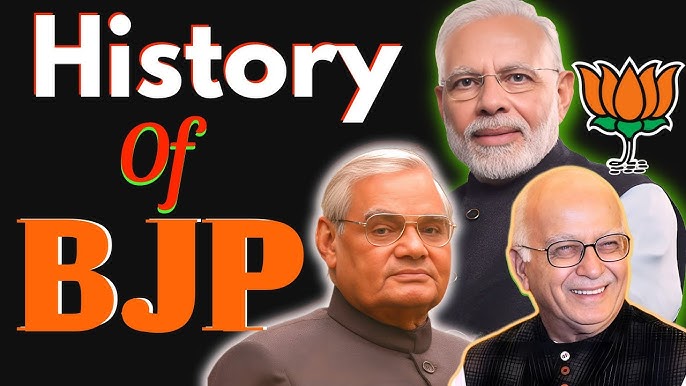
BJP History:- The Bharatiya Janata Party (BJP) stands today as one of the most influential political parties in India, shaping the nation’s governance, policies, and political discourse for decades. But its journey to becoming the world’s largest political party is filled with dramatic turning points, ideological evolution, and landmark victories.
In this comprehensive article, we explore the complete history of BJP, from its roots in the early nationalist movements to its modern-day political dominance.
1. Introduction: The Rise of a Political Powerhouse
The rise of the Bharatiya Janata Party (BJP) is not just the story of a political organization—it is the story of how India’s political landscape transformed over the last several decades. From a modest ideological movement to becoming the world’s largest political party, the BJP’s journey reflects a blend of cultural nationalism, strong organizational discipline, visionary leadership, and deep public connect.
In the years following India’s independence, national politics was dominated by a single party, leaving very little room for alternative voices. Yet beneath the surface, a new political stream was gaining momentum. It emerged from India’s cultural roots, from grassroots volunteers, and from leaders who believed in redefining the nation’s identity through a blend of tradition and modern governance.
This growing undercurrent slowly evolved into a formidable political force that would eventually reshape India’s democracy, challenge long-standing power structures, and set new benchmarks in electoral strategy, governance, and national policy.
The BJP’s rise from its early ideological origins to its present-day dominance is a testament to perseverance, clarity of purpose, and a relentless focus on public engagement. Understanding this rise is essential to understanding modern Indian politics itself—because the story of today’s India cannot be told without the story of the BJP.
2. Ideological Foundations: The Roots Before BJP
To understand the Bharatiya Janata Party’s phenomenal rise, it is essential to explore the ideological and organizational roots that existed long before the BJP officially came into existence in 1980. The party did not emerge overnight—it evolved from decades of cultural, social, and political movements that shaped its philosophy and identity. These early influences built the foundation on which BJP stands today.
At the core of these roots lies a set of ideas that revolve around cultural nationalism, self-reliance, social harmony, and strong national identity. These ideas were nurtured through movements, leaders, and organizations that believed India’s political future must be anchored in its civilizational values.
Let’s explore these roots in detail.
2.1 The Influence of the Rashtriya Swayamsevak Sangh (RSS)
The most prominent and enduring ideological pillar of the BJP is the Rashtriya Swayamsevak Sangh (RSS), founded in 1925 by Dr. Keshav Baliram Hedgewar.
RSS was established at a time when India was under foreign rule and struggling for national unity. Its primary objective was to strengthen society from within by building disciplined, patriotic, and socially committed individuals.
Key Ideological Principles of RSS
- Cultural Nationalism (Hindutva): A belief that India’s identity is deeply rooted in its ancient civilizational heritage.
- Social Unity: Breaking barriers of caste, region, and religion to create a cohesive society.
- Discipline and Character Building: Empowering citizens with leadership qualities and moral strength.
- Nation First Philosophy: Prioritizing national interests above individual or political interests.
RSS as an Organizational Backbone
Over decades, RSS created a nationwide grassroots network through its welfare initiatives, volunteer groups, and ideological training.
This massive organizational network later became the backbone that supported:
- Bharatiya Jana Sangh (BJS)
- BJP
- Several social and cultural movements
Thus, RSS did not merely influence BJP—it laid the ideological groundwork for its formation.

2.2 The Birth of the Bharatiya Jana Sangh (BJS) – 1951
Before BJP, the political expression of RSS ideology took shape through the Bharatiya Jana Sangh, founded in 1951 by Dr. Syama Prasad Mukherjee.
At a time when Congress dominated Indian politics, Jana Sangh offered a new vision of India—one based on cultural identity, strong borders, and decentralized economic policies.
Core Principles of Jana Sangh
- One Nation, One Constitution (especially concerning Jammu & Kashmir)
- Promotion of Indian Culture and Education
- Strong National Defense
- Swadeshi-Oriented Economic Policies
- Uniform Civil Code
These principles later became central to BJP’s political agenda.
Role of Key Leaders
Several leaders who later shaped BJP began their political journeys in Jana Sangh, including:
- Deendayal Upadhyaya – Author of “Integral Humanism”
- Atal Bihari Vajpayee – Future PM
- Lal Krishna Advani – Architect of BJP’s mass movements
Jana Sangh gradually built a national presence through principled politics and grassroots activism.
2.3 Deendayal Upadhyaya and “Integral Humanism”
One of the most defining intellectual contributions to the ideological foundations of BJP came from Deendayal Upadhyaya.
His philosophy of Integral Humanism (एकात्म मानववाद), introduced in 1965, proposed a balanced model of development that combined:
- Cultural values
- Social welfare
- Economic pragmatism
- Decentralized governance
Upadhyaya’s ideas became the long-term ideological compass for both Jana Sangh and later BJP.
2.4 Coalition Politics and Emergency: Strengthening the Roots
The political struggles before BJP’s formation also strengthened its ideological coherence.
During the Emergency (1975–77):
- Jana Sangh leaders were arrested.
- Civil liberties were suspended.
- Opposition unity grew stronger.
The resistance during this period gave Jana Sangh immense public sympathy and political credibility.
Formation of Janata Party (1977):
After Emergency, Jana Sangh merged with other opposition groups to form Janata Party, which briefly came to power.
Though the unity did not last, it showed the strength of Jana Sangh’s network and ideology.
This turbulent phase ultimately led to the birth of BJP in 1980.
2.5 The Road to BJP: A Convergence of Ideology and Organization
By the late 1970s, the groundwork for a new political force was already prepared:
- RSS had created a disciplined nationwide cadre.
- Jana Sangh had provided political experience and visibility.
- Intellectual frameworks like Integral Humanism offered ideological clarity.
- Emergency-era struggles boosted public support for alternative politics.
Thus, when Bharatiya Janata Party was officially launched in 1980, it inherited a strong ideological heritage and a well-trained organizational base.
3. Bharatiya Jana Sangh Era (1951–1977)
The Bharatiya Jana Sangh (BJS) represents the earliest organized political expression of the ideology that would eventually shape the Bharatiya Janata Party (BJP). Established in 1951, the Jana Sangh laid the foundational political structure, leadership base, and ideological direction that later evolved into one of India’s most influential political forces.
The 26-year period from 1951 to 1977 was a time of growth, struggle, consolidation, and significant transformation—not just for the party, but for Indian politics as a whole.
This era captures the birth of an alternative political narrative in India, one rooted in cultural nationalism, strong governance, and ideological clarity.
3.1 Formation of the Bharatiya Jana Sangh (1951)
The BJS was founded on 21 October 1951 by Dr. Syama Prasad Mukherjee, a prominent nationalist leader and former Minister in Jawaharlal Nehru’s cabinet.
He resigned due to disagreements over national security, Jammu & Kashmir’s special status, and Nehru’s approach toward Pakistan.
The creation of Jana Sangh marked a turning point in Indian politics—it brought forth a party that sought to interpret democracy through India’s civilizational values.
Key Objectives at Formation
- Strengthening national unity
- Opposing Article 370
- Promoting indigenous culture
- Encouraging Swadeshi economy
- Enhancing national security
From the very beginning, Jana Sangh stood for a bold and distinct political identity.
3.2 Early Leadership and RSS Support
Though technically a separate political entity, Jana Sangh received strong ideological and organizational support from the Rashtriya Swayamsevak Sangh (RSS).
Many of its leaders, including Atal Bihari Vajpayee and Lal Krishna Advani, were deeply influenced by RSS’s discipline and nationalistic philosophy.
Early Leaders Who Shaped the Party
- Dr. Syama Prasad Mukherjee – Founder
- Deendayal Upadhyaya – Chief ideologue
- Atal Bihari Vajpayee – Rising orator and strategist
- Lal Krishna Advani – Organization-builder
Their leadership helped transform Jana Sangh into a principled and growing national party.
3.3 Ideological Vision: Cultural Nationalism & Integral Humanism
Jana Sangh’s ideological identity was rooted in the belief that India’s political framework should reflect its cultural heritage.
Core Ideological Themes
- Cultural nationalism
- Unified India
- Decentralized development
- Strong defense
- National identity above vote-bank politics
In 1965, Deendayal Upadhyaya introduced Integral Humanism, which became the party’s guiding doctrine.
This philosophy struck a balance between Western economic models and traditional Indian values, helping the party attract intellectuals and middle-class voters.

3.4 Political Performance in Elections
1952 General Elections — Early Struggles
In India’s first General Elections, Jana Sangh won only 3 seats.
But even this small presence signaled the birth of a new political force.
1957 and 1962 Elections — Slow but Steady Growth
Jana Sangh gradually expanded its base:
- Strengthening presence in North India
- Winning more state assembly seats
- Building a solid cadre structure
1967 Elections — Major Breakthrough
The 1967 elections marked a turning point:
- Jana Sangh won 35 Lok Sabha seats
- Became a key player in anti-Congress politics
- Formed coalition governments in several states (including Uttar Pradesh, Bihar, Punjab)
This success positioned Jana Sangh as a significant challenge to Congress dominance.
3.5 The Tragic Loss: Death of Dr. Syama Prasad Mukherjee
Mukherjee’s sudden death in 1953 under controversial circumstances, after being arrested in Kashmir, gave the party a moral cause and national attention.
His firm stance against Article 370 became a long-term ideological mission for the party.
3.6 The Rise of Vajpayee and Advani
Throughout the 1960s and 70s, two leaders emerged who would later define BJP’s national leadership:
Atal Bihari Vajpayee
- Known for his oratory and moderate political approach
- Became the national face of Jana Sangh
- Served as a bridge between ideological commitment and pragmatic politics
Lal Krishna Advani
- Strengthened organizational structure
- Expanded the party across states
- Helped shape future political strategies
Their partnership became the foundation for BJP’s rise in later decades.
3.7 Jana Sangh During the Emergency (1975–1977)
Prime Minister Indira Gandhi declared a nationwide Emergency in June 1975, suspending civil liberties and arresting opposition leaders.
Impact on Jana Sangh
- Top leaders including Vajpayee and Advani were imprisoned
- Party activities were banned
- RSS volunteers played a critical role in underground resistance
Ironically, the Emergency helped Jana Sangh gain national legitimacy as a defender of democracy.
3.8 The Janata Party Merger (1977)
After the Emergency was lifted, opposition parties united to challenge Congress.
Jana Sangh merged with several other parties to form the Janata Party, which won a historic victory in 1977.
Why This Merger Was Significant
- First non-Congress government formed at the Centre
- Jana Sangh leaders held key ministries
- Gave nationwide visibility to leaders like Vajpayee and Advani
However, ideological differences within the Janata Party soon surfaced, especially regarding RSS links.
3.9 The End of Jana Sangh & The Path to BJP
The Janata Party experiment eventually collapsed in 1979 due to internal conflicts.
This paved the way for former Jana Sangh members to regroup and create a new political identity.
This regrouping resulted in the formation of the Bharatiya Janata Party (BJP) on 6 April 1980.
Thus, the end of Jana Sangh marked the beginning of a new chapter in Indian politics.
4. Formation of the Bharatiya Janata Party (1980)
The year 1980 marked a historic turning point in India’s political evolution with the birth of the Bharatiya Janata Party (BJP). The party emerged not merely as a successor to the Janata Party experiment but as a renewed ideological force determined to create a strong, cohesive, and culturally rooted political identity for India. The formation of BJP symbolized both continuity and transformation—continuity of ideological heritage and transformation in organizational strategy, political messaging, and national vision.
After the collapse of the Janata Party government in 1979, leaders who were committed to the principles of cultural nationalism, democracy, and good governance realized the necessity of building a dedicated political platform of their own. The internal conflicts within the Janata Party, especially over issues related to dual membership and ideological differences, made it clear that the coalition had become unsustainable. Recognizing this political vacuum and the need to preserve their core ideology, senior leaders such as Atal Bihari Vajpayee, Lal Krishna Advani, and Dr. Murli Manohar Joshi took the initiative to establish a new political entity.
On April 6, 1980, the Bharatiya Janata Party was officially formed. This date would later become a symbolic milestone and is celebrated annually as the BJP’s Foundation Day. At its inception, the party adopted the guiding philosophy of “Gandhian Socialism”, social harmony, and national unity—reflecting its intent to attract a broader base beyond ideological supporters. The founders believed that India needed a political party capable of representing cultural pride, national security, economic development, and democratic values all at once.
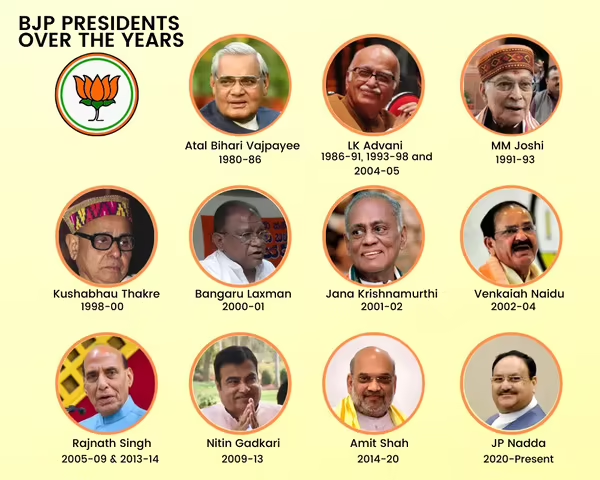
Atal Bihari Vajpayee became the first President of the BJP, providing the party with a moderate, inclusive, and highly respected national face. He emphasized a politics of dialogue, constructive opposition, and long-term national vision. Meanwhile, L.K. Advani played a crucial role in organizational expansion and ideological clarity, strengthening the party’s presence at the grassroots level.
Though the BJP initially struggled electorally, securing only two seats in the 1984 Lok Sabha elections, its foundation years were dedicated to building an ideological base, strengthening cadre structures, and developing a disciplined party machinery. The party’s commitment to cultural identity, national security, and political integrity helped it gain traction among the youth, middle class, and various social groups across the country.
The formation of the BJP in 1980 thus represents the rebirth of a political movement with deep ideological roots, a modern leadership vision, and an unwavering determination to change India’s political narrative. It laid the groundwork for what would eventually become one of the most significant and influential political forces in contemporary Indian history.
5. The 1990s: The Era of Expansion and the Ram Janmabhoomi Movement
Below is a long, detailed, SEO-friendly, formal, and engaging section for your heading:
5. The 1990s: The Era of Expansion and the Ram Janmabhoomi Movement
The 1990s stand out as a defining decade in the history of the Bharatiya Janata Party (BJP). It was during this period that the party transformed from a relatively modest political presence into a dominant national force. The combination of ideological consolidation, mass mobilization, and strategic leadership turned the BJP into a central figure in Indian politics. Central to this transformation was the Ram Janmabhoomi Movement, which reshaped the socio-political landscape of the country and became a catalyst for the party’s unprecedented growth.
A Decade of Political Awakening
As India entered the 1990s, the political environment was rapidly changing. Coalition politics, economic uncertainties, and rising social movements created a vacuum that demanded a decisive, energetic, and ideologically clear alternative. The BJP stepped into this vacuum with a renewed sense of purpose. Unlike earlier years, when the party focused more on organizational building, the 1990s became an era of mass outreach and national mobilization.
The Ram Janmabhoomi Movement: A Turning Point
At the heart of the BJP’s rise lay the Ram Janmabhoomi Movement, a socio-religious and political campaign centered around the demand for constructing a temple at what was believed to be the birthplace of Lord Ram in Ayodhya. Although rooted in decades of historical and cultural sentiment, the movement gained extraordinary momentum in the late 1980s and early 1990s.
The BJP, through its ideological alignment with the movement, played a key leadership role. The party highlighted the issue as one of cultural pride, historical justice, and national identity. This resonated deeply with millions of Indians who felt emotionally connected to the cause.
L.K. Advani’s Rath Yatra
One of the most influential episodes during this period was the Rath Yatra led by L.K. Advani in 1990. Beginning from Somnath in Gujarat and aiming to reach Ayodhya in Uttar Pradesh, this nationwide tour was not just a political event—it became a mass awakening. The Yatra mobilized supporters across states, strengthened the BJP’s grassroots network, and created widespread enthusiasm for the party’s vision.
Despite political resistance and Advani’s eventual arrest by the Bihar government, the Yatra marked a turning point. It propelled the BJP into the national spotlight and showcased the party as the primary voice of cultural nationalism.
Electoral Breakthroughs
The impact of the Ram Janmabhoomi Movement reflected powerfully in elections throughout the 1990s. From marginal numbers in the early 1980s, the BJP’s representation surged as the party emerged as the principal challenger to the Congress. In the 1991 Lok Sabha elections, the BJP made significant electoral gains, becoming a key national opposition.
By the mid-1990s, the party had successfully built a broad voter base—urban middle class, youth, traders, and an increasingly supportive rural segment. This marked the beginning of an era where the BJP was seen not just as an ideological party but as a serious contender for forming the national government.
From Opposition to Government
The culmination of the BJP’s growth in the 1990s came with its first opportunity to lead a national government. In 1996, the BJP emerged as the single largest party in Parliament, and Atal Bihari Vajpayee was sworn in as Prime Minister. Although this government lasted only 13 days due to a lack of majority, it symbolized a monumental achievement—the BJP had arrived at the center of Indian politics.
This decade laid the foundation for future stability and governance, ultimately leading to the formation of the National Democratic Alliance (NDA) in 1998 and the beginning of a new political era.
A Decade That Redefined Indian Politics
The 1990s were not merely a period of political growth for the BJP; they were a period of transformation for India’s democracy itself. The Ram Janmabhoomi Movement changed national narratives, influenced identity politics, and reshaped electoral alignments. The BJP’s rise during this decade demonstrated the power of ideological clarity, disciplined organization, and emotional connect with the masses.
It was the 1990s that truly established the BJP as a political powerhouse—setting the stage for the historic developments that would follow in the 2000s and beyond.
If you want, I can continue with 6. The Vajpayee Era: Coalition Politics and Governance (1998–2004) or your next heading.
6. NDA Era Under Atal Bihari Vajpayee (1998–2004)
The period between 1998 and 2004 is remembered as one of the most defining chapters in the BJP’s history. Under the leadership of Atal Bihari Vajpayee, the party not only formed a stable coalition government but also brought transformative governance, diplomatic maturity, and visionary reforms to India. This era, defined by the National Democratic Alliance (NDA), marked the BJP’s transition from a rising political force to a reliable national governing alternative.
A Coalition Built on Stability and Consensus
In 1998, the Bharatiya Janata Party emerged as the largest party in the Lok Sabha and successfully formed the NDA government with the support of several regional allies. This coalition represented a diverse blend of political ideologies, cultures, and regional interests. Vajpayee’s inclusive and patient leadership allowed the alliance to function smoothly despite its complexities.
His statesmanship became the backbone of the coalition. Known for building consensus, respecting allies, and maintaining political decorum, Vajpayee earned admiration across party lines and among citizens.
Pokhran-II: India Becomes a Nuclear Power
One of the most historic moments of this era came in May 1998, when India conducted a series of nuclear tests at Pokhran, Rajasthan. These successful underground tests brought India into the league of declared nuclear powers.
The decision showcased India’s strategic strength and conveyed a message of national self-reliance and security. Despite global sanctions and diplomatic pressure, the Vajpayee government managed the situation with remarkable resilience and diplomacy, gradually restoring and strengthening international relations.
Economic Reforms and Infrastructure Development
The NDA government, under Vajpayee’s leadership, launched several landmark initiatives that transformed India’s economic and infrastructural landscape.
Golden Quadrilateral Project
Perhaps the most ambitious initiative of this era, the Golden Quadrilateral, aimed at connecting India’s major metros—Delhi, Mumbai, Kolkata, and Chennai—through a high-quality highway network. This project revolutionized road connectivity, boosted trade, and laid the foundation for India’s future economic growth.
Telecom Revolution
The Vajpayee government also led India into the era of modern telecommunications. Structural reforms, private sector participation, and technological advancements made mobile phones accessible to the masses and positioned India as one of the world’s fastest-growing telecom markets.
Economic Liberalization
Although economic reforms began in the early 1990s, the NDA strengthened them further by promoting fiscal discipline, foreign investment, and infrastructure development. The era saw rising economic confidence and global integration.
Diplomatic Maturity and Peace Initiatives
Vajpayee’s tenure is celebrated for its balanced foreign policy, marked by both strategic strength and diplomatic outreach.
Lahore Bus and Peace Efforts
In 1999, Vajpayee made a historic gesture by traveling to Lahore on a bus to initiate peace talks with Pakistan. The visit symbolized India’s commitment to peaceful dialogue, even while remaining vigilant about national security.
Handling the Kargil War with Resolve
The goodwill created by the Lahore visit was soon tested when the Kargil conflict broke out. The Vajpayee government dealt with the intrusion firmly, ensuring a decisive military response while maintaining international support. India’s dignified and strategic handling of the war earned global respect.
Strengthening Democratic Institutions
Vajpayee’s governance style placed strong emphasis on transparency, accountability, and democratic values. His speeches reflected humility, vision, and a deep commitment to the nation.
He encouraged reforms in administration, promoted scientific innovation, supported cultural harmony, and ensured balanced development across states.
2004 Elections and Legacy
Though the NDA lost the 2004 general elections, Vajpayee’s tenure left behind a legacy of stability, progress, and respect in Indian politics. The foundations laid during this era—especially in infrastructure, telecom, diplomacy, and national security—continue to shape India’s development trajectory even today.
A Transformative Chapter in BJP’s Journey
The NDA era under Atal Bihari Vajpayee (1998–2004) remains one of the most influential phases in modern Indian political history. It demonstrated that the BJP could not only rise electorally but also govern responsibly, deliver reforms, and manage complex coalitions with dignity.
This period elevated the BJP’s national stature, deepened its organizational confidence, and set the stage for the party’s next wave of expansion in the decades to follow.

7. BJP as Opposition (2004–2014)
The decade between 2004 and 2014 was a significant and introspective period for the Bharatiya Janata Party (BJP). After leading India through a stable and transformative governance era under Atal Bihari Vajpayee, the party unexpectedly shifted to the opposition benches following the 2004 general elections. This phase was marked by ideological recalibration, organizational restructuring, leadership transitions, and strategic preparation for a new era in Indian politics. It was during these ten years that the BJP strengthened its foundation, refined its strategies, and rebuilt its momentum for a historic comeback.
A Sudden Shift from Power to Opposition
The NDA’s defeat in 2004 came as a surprise to many. Despite the achievements of the Vajpayee government and the popular “India Shining” campaign, the Congress-led UPA secured victory, pushing the BJP into the role of the principal opposition party.
This shift required the BJP to reassess its political strategies, reconnect with grassroots supporters, and re-evaluate national political sentiment. The party knew it had to evolve with the changing aspirations of Indian voters.
Leadership Transitions and Rebuilding
The period saw major changes in the party’s leadership structure:
L.K. Advani as the primary face (2004–2009)
Advani, one of the party’s tallest leaders, played a central role in keeping the BJP unified and active during its opposition years. Under his guidance, the party focused on organizational strengthening and ideological clarity.
Emergence of New Leaders
This decade gave rise to several leaders who would later define the BJP’s national identity, including:
- Narendra Modi
- Arun Jaitley
- Sushma Swaraj
- Rajnath Singh
- Nitin Gadkari
These leaders brought a fresh approach to governance, communication, and organizational management.
Strengthening Organizational Machinery
Recognizing that a return to power required more than just strong leadership, the BJP invested heavily in:
- cadre development
- booth-level management
- communication strategies
- expansion in new regions
- digital outreach (especially after 2010)
The party began modernizing its campaign machinery and emphasized disciplined organizational training to energize its grassroots workers.
Opposition with Purpose
In Parliament, the BJP acted as a strong and active opposition. It raised key national issues such as:
- inflation
- corruption scandals (2G, Commonwealth Games, Coal scam)
- national security
- economic slowdown
- governance deficits in the UPA regime
By consistently highlighting these concerns, the BJP positioned itself as the alternative capable of providing clean governance, economic strength, and national security.
State-Level Successes and Building Momentum
While the BJP was in opposition at the national level, it continued to expand its power across several states. This served as a testing ground for its governance models and helped the party maintain public support.
Key states where the BJP strengthened or retained power included:
- Gujarat
- Madhya Pradesh
- Chhattisgarh
- Rajasthan
- Karnataka (first major breakthrough in South India)
The Gujarat Model
One of the most influential developments during this period was the emergence of Narendra Modi as a strong administrator in Gujarat. His governance style, economic reforms, and development-focused narrative gradually positioned him as a prominent national figure.
Preparing for the Future: Ideological and Strategic Evolution
During this phase, the BJP refined its narrative around:
- development and good governance
- strong national security
- anti-corruption
- economic reforms
- youth-driven politics
- technological modernization
The party also embraced professional campaign strategies, data-driven outreach, and social media engagement, setting the stage for a new style of electioneering.
The Turning Point: 2013–2014
In 2013, the BJP appointed Narendra Modi as the head of its campaign committee and later as its Prime Ministerial candidate. This decision marked a major turning point. Modi’s development-driven image, dynamic communication style, and mass appeal energized the party’s nationwide cadre.
The BJP’s campaign leading up to the 2014 elections focused on hope, change, economic revival, and decisive leadership.
A Decade That Prepared BJP for a Historic Return
The opposition years from 2004 to 2014 were crucial in shaping the BJP’s future trajectory. Though outside government, the party used this decade to rebuild itself, reconnect with citizens, develop new leaders, and modernize its political strategies.
8. The Modi Era: BJP’s Transformation (2014–Present)
The year 2014 marked the beginning of a new political chapter in India’s history—a chapter defined by strong leadership, bold reforms, digital transformation, and an unprecedented expansion of the Bharatiya Janata Party (BJP). Under the leadership of Prime Minister Narendra Modi, the BJP emerged not only as the dominant national party but also as a transformative force reshaping governance, political communication, and public expectations across the country.
This era represents one of the most significant transformations in Indian politics, as the BJP transitioned from a traditional cadre-based party to a modern, technologically advanced, and globally influential political powerhouse.
A Landmark Victory That Changed Indian Politics
The 2014 Lok Sabha elections saw the BJP achieve a historic mandate—the first single-party majority in India in 30 years. This extraordinary victory was rooted in:
- A strong demand for economic revival
- Rising aspirations of youth and middle class
- Discontent with corruption and policy paralysis in the previous government
- Narendra Modi’s powerful messaging, developmental image, and mass appeal
The slogan “Achhe Din” resonated deeply with millions of voters, signaling the arrival of new hope and a break from conventional politics.
Governance with a Development-First Approach
One of the most defining features of the Modi era has been a shift toward development-driven governance. A series of large-scale reforms and welfare schemes transformed India’s social and economic landscape.
Major Economic Reforms
- GST (Goods and Services Tax): Unified the nation under one tax system.
- Insolvency and Bankruptcy Code: Strengthened financial discipline and corporate governance.
- Digital India: Boosted cashless payments, digital governance, and transparency.
Infrastructure Revolution
India saw rapid expansion in:
- Highways and expressways
- Rail modernization
- Airport development under UDAN
- Rural electrification
- Smart Cities Mission
These projects improved connectivity, created jobs, and strengthened India’s global competitiveness.
Welfare Schemes with Mass Impact
The Modi government launched several flagship schemes targeting financial inclusion, social equity, and basic amenities:
- Jan Dhan Yojana: Bringing millions into the banking system
- Ujjwala Yojana: Providing LPG cylinders to rural households
- Ayushman Bharat: The world’s largest health insurance scheme
- Swachh Bharat Mission: A national sanitation revolution
- PM Awas Yojana: Affordable housing for the poor
- Har Ghar Jal Mission: Ensuring piped water supply
These schemes strengthened the BJP’s support base across rural and urban India.
Digital Politics and Modern Campaigning
Under Modi’s leadership, the BJP revolutionized Indian political communication. The party adopted:
- data-driven campaign strategies
- social media outreach
- digital rallies
- targeted messaging
- volunteer-based online support systems
The BJP became a tech-savvy organization, setting new benchmarks in campaign innovation and public engagement.
Ideological Consolidation and National Security
The Modi era also witnessed a strong emphasis on nationalism, cultural identity, and decisive action on security matters.
Key Highlights
- Surgical Strikes (2016) and Air Strike in Balakot (2019)
- Revocation of Article 370 in Jammu & Kashmir
- Criminalization of Triple Talaq
- Citizenship Amendment Act (CAA)
- Completion and inauguration of the Ram Mandir in Ayodhya
These steps reinforced the BJP’s ideological commitments and strengthened its support among nationalist voters.
Massive Electoral Expansion
The BJP continued its electoral momentum with another sweeping victory in 2019, securing an even bigger mandate than in 2014. During this era, the party expanded aggressively across:
- Northeast India
- West Bengal
- Odisha
- Karnataka and Telangana
- Union Territories
The BJP also formed or supported governments in numerous states through alliances, organizational strength, and strategic planning.
Global Recognition and Foreign Policy Leadership
Under Modi, India’s global stature rose significantly. The government strengthened ties with major powers, neighboring countries, and global organizations.
Key Achievements
- Rise of India as a global economic power
- Stronger ties with the US, Japan, Australia, and Middle East
- Leadership in climate change initiatives
- Hosting of G20 Summit 2023
- Expansion of global partnerships in defense, trade, and technology
These diplomatic successes enhanced India’s international reputation and positioned the BJP-led government as a confident global player.
The New BJP: A Political Force Redefined
The transformation of the BJP under Modi can be defined by several core features:
- Centralized but efficient decision-making
- Rapid policy execution
- Strong public messaging
- Development combined with cultural identity
- Unmatched cadre discipline
- Innovation-driven political strategy
The party evolved from a cadre-based movement to a national political machinery capable of influencing policy, governance, and public opinion at an unprecedented scale.
A Continuing Legacy
The period from 2014 to the present represents the BJP’s most decisive political phase—marked by strong leadership, sweeping reforms, nationalistic vision, and historic electoral dominance.
This era has not only redefined the BJP but also reshaped India’s governance model, citizen expectations, and the overall direction of national politics.
9. Organizational Strength and Core Structure
The unparalleled rise of the Bharatiya Janata Party (BJP) is rooted not only in its ideology or leadership but also in its powerful organizational framework. Unlike many political parties that depend heavily on charismatic individuals, the BJP has built a multi-layered, disciplined, and highly structured organization that operates with precision from the national level down to the smallest booth in the country. This organizational strength has been a decisive factor in making the BJP the world’s largest political party and a dominant force in Indian politics.
A Cadre-Based Party: The Backbone of BJP’s Success
Unlike traditional family-led or personality-based political outfits, the BJP functions as a cadre-based organization, drawing strength from committed volunteers and ideological clarity.
The Role of RSS (Rashtriya Swayamsevak Sangh)
The RSS has been the ideological and organizational mentor of the BJP since its inception. Its vast network of volunteers provides:
- disciplined human resources
- ideological grounding
- grassroots mobilization
- social service activities that build trust
This connection allows the BJP to maintain a consistent narrative, strong values, and an extraordinary ability to organize mass campaigns.
Hierarchical but Highly Coordinated Structure
The BJP’s organization is divided into well-defined layers that ensure efficiency, clarity, and accountability:
1. National Level
At the top stands the National President, supported by:
- National General Secretaries
- Vice Presidents
- National Executive Members
- Chiefs of specialized cells (IT cell, youth wing, women’s wing, etc.)
This body is responsible for national strategy, alliances, policies, and election management.
2. State Level
Each state has:
- State Presidents
- State Executive Committees
- Regional and District Chiefs
This ensures that the party adapts to regional aspirations while staying aligned with national goals.
3. District and Block Level
District and block units coordinate:
- local outreach
- booth management
- political activities
- issue-based campaigns
These levels are the operational engines of the party.
4. Booth-Level Structure
The BJP’s real strength lies at the booth level, where the party appoints:
- Booth Presidents
- Page Pramukhs (one in charge of 30 voters)
- Vistaraks (full-time workers)
This micro-management allows BJP to connect with every household and monitor voting patterns with precision.
Special Wings and Cells: A Broad-Based Appeal
To ensure representation and engagement across different sections of society, the BJP runs specialized organizational arms:
- Bharatiya Janata Yuva Morcha (BJYM) – youth politics and mobilization
- Mahila Morcha – women’s empowerment and participation
- Kisan Morcha – farmer-related issues
- Scheduled Caste and OBC Morchas – inclusive outreach
- IT & Social Media Cell – digital campaigns, data analytics
- Overseas BJP (OFBJP) – global engagement with diaspora
These wings widen the party’s base and make it responsive to diverse social groups.
Training, Discipline, and Political Education
A distinguishing feature of the BJP is its emphasis on training and political education.
Key Features
- Ideological training camps
- Organizational workshops
- Communication training for spokespersons
- Leadership grooming programs
- Booth-level worker education campaigns
This ensures that workers at all levels understand the party’s principles, strategies, and priorities.
Data-Driven Decision Making
Modern BJP has become a technology-driven political organization, especially after 2014. The party uses:
- data analytics
- voter mapping
- social media strategy
- targeted messaging
- digital feedback systems
This scientific approach enhances election preparedness and public outreach, giving BJP a competitive edge.
Volunteer Culture and Ground Connect
The BJP’s structure thrives on:
- thousands of full-time workers (Vistaraks)
- crores of volunteers
- active booth-level teams
This deep ground-level presence ensures:
- quick feedback from voters
- effective implementation of campaigns
- high voter turnout during elections
No other Indian political party has such an expansive and disciplined volunteer base.
Alliance Management: The NDA Framework
The BJP also manages alliances effectively through:
- respectful coordination
- role-sharing
- regional strategy customization
The National Democratic Alliance (NDA) has been a major tool for expanding BJP’s reach across diverse regions.
A Modern, Professional, and Scalable Organization
The combination of traditional cadre discipline and modern political professionalism makes the BJP’s organization unique. The party:
- adapts quickly
- uses technology efficiently
- maintains internal discipline
- emphasizes accountability
- ensures constant communication between leaders and workers
This hybrid model of ideology + organizational strength + technology has set new standards in Indian politics.
Why Organizational Strength Matters
The BJP’s organizational model has been central in helping the party:
- win elections consistently
- maintain stable governments
- deliver large-scale campaigns
- reach every corner of the country
- stay connected with diverse communities
Its success is not accidental but the result of a meticulously crafted organizational system built over decades.
10. Prominent Leaders in BJP History
The Bharatiya Janata Party’s journey from a modest political group to one of the world’s largest democratic parties is deeply connected with its strong and visionary leadership. Over the decades, several leaders have shaped the BJP’s ideology, strategy, organizational discipline, and national reach. Their contributions helped the party evolve into a dynamic political powerhouse with a clear ideological foundation and mass appeal.
Below is a detailed look at the most influential figures who have defined BJP’s identity and continued its growth across generations.
Atal Bihari Vajpayee – The Statesman and National Icon
Atal Bihari Vajpayee stands as one of the tallest leaders in BJP’s history. Known for his poetic style, powerful oratory, and inclusive approach, Vajpayee gave the BJP national acceptability.
- First non-Congress PM to complete a full term (1999–2004)
- Led India to nuclear status with the 1998 Pokhran tests
- Introduced visionary infrastructure projects like the Golden Quadrilateral
- Promoted economic reforms, telecom revolution, and diplomatic outreach
Vajpayee is often remembered as the leader who transformed BJP from an opposition party into a credible national alternative.
Lal Krishna Advani – The Architect of BJP’s Political Rise
L.K. Advani played a decisive role in building BJP’s organizational and ideological strength.
- Championed the Ram Janmabhoomi movement, which expanded BJP’s national footprint
- Reinforced the party’s stance on cultural nationalism
- Served as Deputy Prime Minister and Home Minister
- Master strategist who strengthened the party’s cadre-based model
Advani’s Rath Yatra is considered one of the turning points that pushed the BJP into mainstream national politics.
Narendra Modi – The Game Changer and Global Leader
Prime Minister Narendra Modi represents a new era of assertive leadership and rapid transformation in BJP history.
- Led BJP to historic mandates in 2014 and 2019
- Introduced major reforms like GST, Digital India, Make in India, and Startup India
- Oversaw landmark decisions such as Article 370 abrogation, Triple Talaq ban, and Ram Mandir construction
- Positioned India as a global power with strong diplomatic relations
- Built one of the world’s strongest political communication models
Under his leadership, BJP expanded into states where it previously had little presence, reshaping India’s political landscape.
Shyama Prasad Mukherjee – The Ideological Pioneer
Shyama Prasad Mukherjee founded the Bharatiya Jana Sangh (BJS), which later evolved into the BJP.
- Advocated strongly for national integration
- Opposed Article 370 and fought for complete unity of Jammu & Kashmir
- Established the ideological foundation based on nationalism and cultural identity
His legacy continues to influence the party’s core philosophy.
Deendayal Upadhyaya – The Thinker Behind ‘Integral Humanism’
Deendayal Upadhyaya significantly shaped BJP’s ideological identity.
- Introduced the concept of Integral Humanism, the party’s core philosophy
- Promoted the idea of self-reliant villages, cultural harmony, and balanced development
- Strengthened BJP’s cadre-based discipline through the RSS-BJS link
His thoughts still guide the party’s policy and governance approach.
Rajnath Singh – The Organizational Stabilizer
A senior BJP leader and current Defence Minister, Rajnath Singh has contributed immensely to organizational consolidation.
- Served as BJP National President twice
- Known for grassroots strengthening and disciplined leadership
- Played a key role in expanding BJP’s influence in northern India
- Oversaw modernization of India’s defence capabilities
Amit Shah – The Master Strategist
Often called the “Chanakya of Modern Politics,” Amit Shah engineered BJP’s electoral machinery in the 21st century.
- Oversaw BJP’s expansion in new regions like North-East India
- Developed data-driven campaigning and booth-level strategy
- Played a major role in 2014 and 2019 landslide victories
- Instrumental in key decisions such as Article 370 abrogation and CAA
Shah’s organizational vision helped BJP become the world’s largest political party.
Other Influential Leaders
Murli Manohar Joshi
A prominent ideologue who strengthened BJP’s intellectual base and educational policies.
Arun Jaitley
The bridge-builder of BJP, known for his strategic communication, economic reforms, and coalition management.
Sushma Swaraj
A respected mass leader and former External Affairs Minister, admired for her compassionate diplomacy and accessible leadership.
Yogi Adityanath
A prominent face of BJP in Uttar Pradesh, steering the party’s governance model focused on development and law & order.
11. BJP’s Ideology Today
The Bharatiya Janata Party (BJP) of the present era stands on a strong ideological foundation that blends its historical roots with modern aspirations. While its core philosophy still draws heavily from cultural nationalism and the principles laid down by early thinkers like Deendayal Upadhyaya and Shyama Prasad Mukherjee, today’s BJP also reflects a forward-looking, development-oriented vision that appeals to a broad spectrum of India’s population.
Let’s explore BJP’s contemporary ideology in detail.
A. Cultural Nationalism (सांस्कृतिक राष्ट्रवाद)
Cultural nationalism remains at the heart of BJP’s present-day ideology. This worldview emphasizes:
- India as a civilizational nation with thousands of years of cultural continuity
- The importance of preserving and promoting Hindu cultural identity
- Unity through shared heritage rather than just political boundaries
This ideology sees Indian culture as inclusive, diverse, and deeply rooted in ancient wisdom, but also open to modern adaptation.
B. Integral Humanism – The Core Guiding Philosophy
BJP continues to follow Integral Humanism, the doctrine articulated by Deendayal Upadhyaya. It advocates a balanced approach to development by recognizing the importance of:
- Economic growth
- Social harmony
- Cultural identity
- Ethical governance
The party aims to ensure that development benefits the last person in the queue, promoting welfare without losing economic direction.
C. Development-Centric Politics (Vikas and Growth Model)
One of the strongest pillars of BJP’s modern ideology is a commitment to rapid and inclusive development.
Key ideas include:
- Digital transformation (Digital India)
- Entrepreneurship and innovation (Startup India, Make in India)
- Infrastructure modernization (expressways, metro networks, ports, smart cities)
- Rural development with a focus on self-reliance and empowerment
- Welfare schemes delivered directly through digital platforms
This development-first ideology has helped BJP expand its appeal beyond traditional bases.
D. Strong National Security and Strategic Defence
BJP places special emphasis on national security, seeing it as essential to stability and growth.
The ideology includes:
- Modernization of the armed forces
- Zero-tolerance policy against terrorism
- Strengthening border security
- Assertive foreign policy that positions India as a global power
This approach has reshaped India’s diplomatic posture and strategic presence on the world stage.
E. Good Governance and Accountability (Su-rajya)
BJP promotes the model of minimum government, maximum governance, meaning:
- Reducing bureaucratic delays
- Promoting transparency through digital platforms
- Ensuring faster delivery of public services
- Eliminating corruption through structural reforms
This has led to an administration style focused on efficiency, technology, and performance.
F. Social Harmony and Inclusive Politics
Though often viewed through the lens of cultural nationalism, the party today emphasizes:
- Upliftment of economically weaker sections
- Gender empowerment
- Welfare programs across caste and community lines
- Promotion of “Sabka Saath, Sabka Vikas, Sabka Vishwas”
This slogan captures BJP’s attempt to expand its social base and connect with diverse groups.
G. Economic Reform and Market-Friendly Policies
BJP supports a progressive yet regulated market system, believing that economic strength is essential for national advancement.
The belief system includes:
- Encouraging private investment
- Strengthening manufacturing
- Reforming taxation (GST)
- Boosting exports
- Promoting financial inclusion (Jan Dhan, UPI, banking reforms)
The party’s economic ideology balances growth with social responsibility.
H. Self-Reliance and National Pride (Atmanirbhar Bharat)
A more recent ideological theme is Atmanirbhar Bharat, which promotes:
- Localization and domestic manufacturing
- Reducing dependency on imported goods
- Strengthening Indian industries and startups
- Building a resilient economic ecosystem
This vision ties economic independence with India’s global ambitions.
Conclusion: A Blend of Tradition and Transformation
BJP’s ideology today is a carefully woven combination of its historical roots and its modern mission. It embraces:
- Cultural heritage
- National pride
- Economic progress
- Technological strength
- Strong governance
- Strategic global positioning
Together, these elements have shaped the party’s identity in the 21st century and helped it emerge as a dominant political force.
12. Criticisms and Challenges Faced by BJP
As one of the largest and most influential political parties in India, the Bharatiya Janata Party (BJP) has experienced both historic success and significant scrutiny. While the party enjoys widespread support, it has also faced sharp criticism from opposition parties, intellectuals, civil society groups, and sections of the public. These criticisms often reflect India’s diverse and complex political landscape.
Below is a detailed and balanced look at the major criticisms and challenges BJP has encountered over the years.
A. Concerns Over Majoritarianism and Communal Politics
One of the most common criticisms is the accusation that BJP promotes a majoritarian ideology.
Critics argue:
- The emphasis on cultural nationalism may marginalize minority communities.
- Policies and political messaging sometimes create perceptions of polarization.
- Issues like the Ram Mandir movement, cow protection debates, and citizenship laws often intensify communal narratives.
BJP, however, refutes these claims, stating that its policies focus on nationalism and development without discrimination.
B. Issues Related to Democratic Institutions
Opponents allege that the party’s strong central leadership has impacted institutional autonomy.
Criticism includes:
- Centralization of power in the Prime Minister’s Office
- Declining independence of certain institutions like investigative agencies
- Reduced space for opposition voices in Parliament
The party argues that reforms and strong governance are necessary for effective administration.
C. Economic Challenges and Unemployment Concerns
Despite major economic reforms, BJP has faced criticism over economic management.
Key concerns raised:
- Periods of slow GDP growth, especially during global downturns
- Rising unemployment among youth
- Impact of demonetization on small businesses
- Challenges faced by MSMEs after GST implementation
Supporters argue that long-term benefits outweigh temporary disruptions.
D. Criticism Over Handling of Social Issues
BJP has been questioned over its approach toward specific social and cultural issues.
Critics highlight:
- Rising social tensions in certain regions
- Stricter laws on cow protection and religious conversions
- Accusations of promoting conservative cultural values
BJP maintains that its measures protect cultural integrity and law and order.
E. Opposition to Certain Legal and Constitutional Decisions
Several major decisions taken during BJP’s tenure have generated intense national debate.
Controversial areas include:
- Article 370 abrogation in Jammu & Kashmir
- Citizenship Amendment Act (CAA)
- Farm laws (later repealed after nationwide protests)
- Electoral Bonds scheme
These decisions often spark legal challenges, public protests, and discussions on constitutional implications.
F. Allegations of Media Influence
Some critics argue that BJP has an outsized influence on mainstream media.
Concerns include:
- Reduced critical coverage
- Increased pro-government narratives
- Harassment allegations made by some journalists
The party denies accusations, claiming media freedom remains intact.
G. Social Media Ecosystem and Misinformation
With BJP’s strong digital presence, critics accuse the party of contributing to online polarization.
Common criticisms:
- Use of aggressive political trolling
- Circulation of misinformation by certain supporter groups
- Highly coordinated online campaigns
BJP counters that it only uses digital platforms for legitimate communication and organizational purposes.
H. Federal Tensions With Opposition-Led States
BJP has faced several governance challenges due to disagreements with states ruled by opposition parties.
Conflicts often arise in areas such as:
- Center-state financial relations
- Law and order jurisdiction
- Governors’ power and intervention
- Implementation of central schemes
These tensions highlight India’s complex federal structure.
I. Internal Party Challenges
Even as a dominant political force, BJP faces organizational and internal challenges.
Key issues include:
- Maintaining ideological unity across a rapidly expanding base
- Managing differences between conservative and moderate factions
- Ensuring smooth leadership transitions in the future
- Addressing concerns about sidelining of senior leaders
Rapid growth often brings internal pressures that require careful management.
13. BJP’s Influence on India’s Democracy
The Bharatiya Janata Party (BJP) has played a pivotal role in shaping modern Indian democracy. As one of the largest democratic parties in the world, its rise has not only transformed electoral politics but also reshaped governance models, political narratives, and public engagement. Whether one agrees with the party’s ideology or not, its influence on India’s democratic system is undeniable and far-reaching.
Let’s explore how BJP has impacted India’s democratic landscape—politically, socially, and institutionally.
A. Strengthening Multi-Party Competition
The BJP’s rapid rise turned India into a truly competitive multi-party democracy.
Key impacts include:
- Ending the era of long-term single-party dominance
- Encouraging regional parties to build stronger strategies
- Creating more dynamic election cycles with high voter interest
- Promoting ideological debates rather than personality-driven politics
Its growth has pushed political rivals to evolve, improve organization, and form new alliances.

B. Expanding Political Participation and Voter Engagement
One of BJP’s biggest contributions is increasing political participation across demographics.
The party successfully brought into mainstream politics:
- First-time voters
- Women
- Lower-income groups
- Youth from small towns
- Voters in regions historically less involved in national elections
Mass campaigns, digital outreach, and emotional connect through nationalism have significantly boosted voter turnout.
C. Redefining Election Campaigning in India
BJP has modernized and professionalized how political campaigns operate.
Influential approaches:
- Data-driven election strategy
- Extensive booth-level management
- Digital outreach through social media apps and platforms
- Use of narrative-based messaging and branding
- Large-scale rallies and direct mass communication
This new model has set benchmarks for election management in India.
D. Centralization of Power and Strong Leadership Model
BJP’s style of leadership—particularly during the Modi era—has promoted a strong centralised model of governance.
Influences on democracy include:
- More decisive policy-making
- Faster implementation of national schemes
- Greater visibility of leadership at the top
While supporters see this as efficient governance, critics view it as reduced decentralization and weaker internal party democracy.
E. Rise of Ideological Politics Over Caste-Based Politics
BJP has contributed to shifting India’s political focus from caste divisions to ideological identity.
Key influences:
- Increased discussion around nationalism, cultural identity, and security
- Declining dominance of caste-based vote banks in several states
- Pan-India ideological narratives replacing fragmented regional politics
This shift has changed how political groups build campaigns and connect with voters.
F. Transforming Governance Expectations
BJP’s governance style has set new standards for administrative performance.
Public expectations have shifted toward:
- Quick delivery of government services
- Transparent digital processes
- Accountability through real-time monitoring
- Welfare schemes reaching beneficiaries directly through DBT
- Strong national security measures
This transformation influences voter expectations regardless of who is in power.
G. Impact on Federalism and Center-State Relations
BJP’s dominance at the national level has affected India’s federal structure in multiple ways.
Key changes include:
- Greater central influence on policymaking
- Stronger coordination with BJP-led states
- Increased friction with opposition-led states over governance issues
- More assertive roles for Governors
This dynamic continues to shape India’s federal balance.
H. Strengthening Grassroots Democracy Through Organizational Structure
BJP’s cadre-based structure—supported by the RSS network—has deepened grassroots political engagement.
Impacts include:
- More active booth-level committees
- Leadership emerging from local and district levels
- Continuous voter feedback loops
- Simplified communication between citizens and leadership
This has strengthened democracy at the foundational level.
I. Shaping National Identity and Public Narratives
BJP has played a major role in influencing India’s social and national discourse.
Themes popularized include:
- Cultural pride
- Historical re-evaluation
- National security awareness
- Self-reliance and economic nationalism
- Social welfare as a national duty
These narratives influence public opinion and democratic engagement.
J. Criticism and Debate—A Sign of Vibrant Democracy
The BJP’s influence has also sparked intense debates, protests, and intellectual discussions across the country.
This includes:
- Opposition to certain laws and policies
- Public movements and grassroots activism
- Media discourse and parliamentary resistance
- Judicial scrutiny
While politically challenging, these debates highlight the strength of India’s democratic framework.
14. Future of BJP: What Lies Ahead?
The future of the Bharatiya Janata Party (BJP) is one of the most compelling topics in Indian politics. As the party continues to dominate the national landscape and expand its influence across states, questions naturally arise: What direction will the BJP take next? How will it evolve? What challenges must it navigate?
Based on political trends, demographic shifts, technological advancements, and changing public expectations, the future trajectory of the BJP appears dynamic, ambitious, and full of both opportunities and challenges.
Let’s explore what lies ahead for the BJP in the coming years.
A. Continued Expansion Across India
One of BJP’s long-term goals is to achieve true pan-India presence, especially in states where its footprint is currently limited.
Future focus areas include:
- South India: Tamil Nadu, Kerala, Telangana, Andhra Pradesh
- Eastern India: West Bengal, Odisha
- Strengthening in the Northeast through alliances and grassroots networks
This expansion strategy relies heavily on:
- Regional leadership grooming
- Alliances with influential local parties
- Caste balance and social engineering
- Localized development narratives
B. Leadership Transition and Internal Evolution
The BJP’s future depends on how it manages leadership transitions.
Key considerations:
- Identifying the next generation of national leaders
- Balancing the influence of RSS with modern political demands
- Maintaining unity in a rapidly growing organization
- Ensuring space for new faces, youth, and regional voices
Smooth internal transitions will be crucial to sustaining long-term stability.
C. Ideological Continuity With Modern Adaptation
While cultural nationalism and Integral Humanism will remain core pillars, the BJP may continue to refine its ideology to match global and domestic realities.
Possible future shifts:
- Stronger emphasis on economic nationalism
- Greater push toward technological governance
- Enhanced focus on self-reliance and innovation
- Expansion of welfare-driven politics based on digital platforms
Balancing tradition with modernization will shape the party’s long-term identity.
D. Strengthening India’s Global Position
As India rises on the global stage, the BJP is likely to continue pursuing assertive diplomacy.
Future directions may include:
- Expanding strategic partnerships with major global powers
- Positioning India as a leader in the Global South
- Strengthening defense capabilities and regional influence
- Boosting India’s role in global supply chains
This global ambition aligns with the party’s vision of India as a powerful and respected nation.
E. Technological Governance and Digital Politics
The BJP is already a leader in digital campaigning and e-governance. The future will see an even deeper technological shift.
Expected developments:
- AI-driven public service delivery
- Expansion of digital identity systems
- Fully tech-enabled welfare distribution
- Sophisticated election analytics
- Stronger cybersecurity focus
Technology will remain a central pillar of governance and public communication.
F. Addressing Economic Challenges and Youth Aspirations
With a rapidly growing young population, BJP’s future success depends on delivering sustainable economic progress.
Focus areas include:
- Job creation through manufacturing and startups
- Skill development and vocational training
- Boosting MSMEs and rural enterprises
- Agricultural reforms tailored to modern markets
Meeting youth expectations will determine long-term political stability.
G. Navigating Social Harmony and Diversity
India’s diversity poses both an opportunity and a challenge.
Key future tasks for BJP:
- Balancing majoritarian concerns with minority inclusion
- Reducing polarization and building broader consensus
- Promoting cultural pride without deepening social fault lines
How the BJP manages social harmony will shape its democratic legitimacy.
H. Managing Opposition Unity and Political Competition
A united opposition remains one of the biggest future challenges.
BJP will need to:
- Counter coalition politics
- Retain dominance in Hindi heartland
- Address anti-incumbency in long-governed states
- Maintain credibility through performance-driven governance
Political competition will become sharper, and the BJP must continue to innovate.
I. Policy Reforms and Long-Term Governance Vision
The party is expected to push for major long-term reforms in areas such as:
- Electoral transparency
- Judicial efficiency
- Police modernization
- Education and healthcare reforms
- Climate resilience and sustainable development
These reforms will shape India’s next developmental stage.
J. The Question of Longevity
The biggest question: Can the BJP maintain its dominance for decades to come?
The answer will depend on:
- Ability to reinvent itself
- Responsiveness to public feedback
- Balance between ideology and governance
- Capacity to nurture new leadership
- Success in navigating domestic and global challenges
If managed well, the BJP could continue shaping India’s political future for many years.
Conclusion
The history of BJP is a powerful story of ideology, resilience, organization, and leadership. From the early Jana Sangh days to becoming the world’s largest political party, the BJP’s journey reflects India’s evolving democracy.
As the political landscape continues to shift, the BJP remains a central force influencing India’s direction for years to come.
Frequently Asked Questions (FAQ) About the Future of BJP
1. What factors will shape the BJP’s future in Indian politics?
The future of the BJP will depend on public sentiment, economic performance, regional alliances, welfare delivery, leadership transitions, and how effectively the party adapts to evolving voter expectations.
2. Will the BJP continue to dominate Indian elections?
The BJP has a strong organizational structure, a wide support base, and a clear ideological identity. If the party continues delivering on development, governance, and welfare schemes, it can maintain dominance. However, rising regional parties and anti-incumbency could be potential challenges.
3. Can BJP succeed without Narendra Modi’s leadership?
Prime Minister Modi remains a central figure in the BJP’s popularity. Over the long term, the party will need a robust second line of leadership. The success of this transition will significantly influence its future trajectory.
4. What challenges might BJP face in the next elections?
The BJP may face challenges such as rural dissatisfaction, unemployment concerns, regional party consolidation, caste-based politics, and the natural impact of long-term incumbency.
5. How important is youth voters for BJP’s future?
Very important. With millions of new voters joining the electoral rolls every year, the BJP must continue appealing to youth through job creation, digital opportunities, skill development, and aspirational policies.
6. Can economic issues affect BJP’s future performance?
Yes. Economic indicators—jobs, inflation, agriculture income, and industrial growth—play a major role. Strong economic performance will strengthen BJP’s future; setbacks may create openings for opposition parties.
Pros and Cons of the Bharatiya Janata Party (BJP)
Pros of BJP
1. Strong Leadership
The BJP is known for its decisive and charismatic leadership. Under leaders like Narendra Modi, the party projects stability, clarity of vision, and quick decision-making.
2. Development-Focused Governance
BJP prioritizes infrastructure building, digital services, economic growth, and modern public systems. Initiatives like:
- Digital India
- Make in India
- UPI & Jan Dhan
- Smart Cities
have reshaped India’s development journey.
3. National Security and Strategic Defense
BJP places strong emphasis on national security, border protection, and strengthening armed forces. Its assertive foreign policy enhances India’s global standing.
4. Efficient Welfare Delivery
The party uses technology to ensure that welfare schemes reach beneficiaries directly. DBT (Direct Benefit Transfer) and Aadhaar-based systems have reduced leakages.
5. Organizational Strength
BJP is one of the world’s largest political parties with a disciplined, cadre-based structure. Its strong ground-level network ensures effective voter outreach.
6. Pan-India Appeal
From youth to rural voters, BJP has successfully built a broad support base across regions, classes, and age groups.
7. Boost to India’s Global Image
BJP’s diplomacy has positioned India as a major global player—active in G20, BRICS, Indo-Pacific alliances, and global climate initiatives.
Cons of BJP
1. Criticisms of Majoritarian Politics
Opponents accuse the party of promoting cultural nationalism in ways that may alienate minorities. Issues like CAA, Ram Mandir, and religious polarization remain debated.
2. Centralization of Power
Critics argue that too much power lies with the central leadership, reducing autonomy of:
- Institutions
- State governments
- Opposition voices
3. Economic Challenges
Despite reforms, BJP faces criticism for:
- High unemployment
- Impact of demonetization
- Complexities of GST for small businesses
- Slowdown during global crises

4. Handling of Social Issues
Some believe BJP’s policies on cow protection, religious conversions, or cultural debates sometimes increase social tensions.
5. Strained Federal Relations
Tension between BJP-led Centre and opposition-led states over policy implementation, Governor roles, and financial matters remains a challenge.
6. Accusations of Media Influence
Critics allege the BJP has an outsized impact on mainstream media narrative, reducing critical voices.
7. Digital Misinformation Concerns
BJP’s large social media ecosystem is sometimes associated with:
- Online trolling
- Polarizing campaigns
- Spread of misinformation by certain supporter groups
8. Internal Party Pressures
As the party expands, it faces challenges like:
Avoiding factional disputes
Managing ideological diversity
Balancing old guard and new leaders
Discover more from Mithu Tech Group
Subscribe to get the latest posts sent to your email.