


Blog
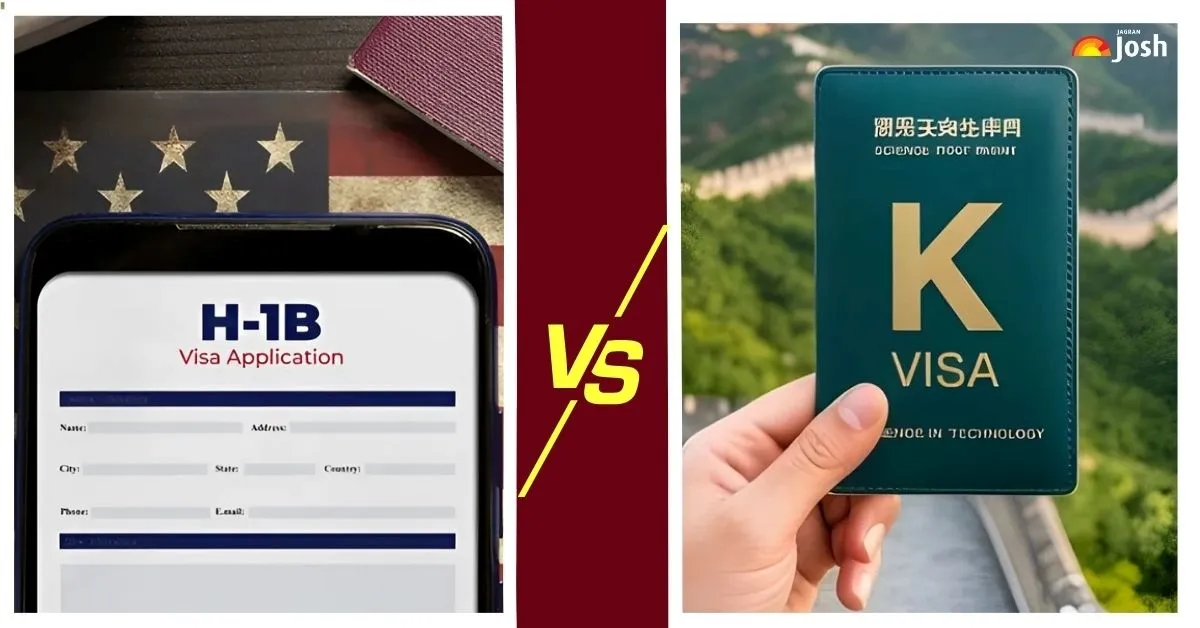
Navigating Global Talent Mobility: A Comparative Analysis of the US H1B Visa and China K Visa

1. Introduction
In an era of rapid technological advancement and global interconnectedness, the movement of skilled professionals across borders has become a pivotal factor in shaping national innovation landscapes. The United States, historically a magnet for global talent, has seen its immigration policies evolve, notably with the H-1B visa program. Concurrently, China has introduced the K visa, aiming to attract young STEM professionals to bolster its innovation ecosystem. This article delves into a comparative analysis of these two visa programs, examining their structures, benefits, and implications for global talent mobility.
2. Understanding the U.S. H-1B Visa
2.1 Overview and Purpose
The H-1B visa was introduced under the Immigration Act of 1990 to allow U.S. employers to temporarily employ foreign professionals in specialty occupations. These are roles that typically require advanced knowledge or a bachelor’s degree in fields such as IT, engineering, medicine, and scientific research.
Primary Goals of the H-1B Visa:
- Address Skill Shortages: Enable U.S. companies to hire qualified foreign professionals in high-demand sectors.
- Enhance Innovation: Bring global expertise to boost research, technology development, and scientific advancement.
- Provide a Path to Permanent Residency: Many H-1B holders use this visa as a stepping stone toward a Green Card.
- Maintain Global Competitiveness: Help U.S. firms stay competitive internationally by tapping into a global talent pool.
Key Points:
- Requires employer sponsorship.
- Subject to an annual cap, with additional quotas for advanced degree holders from U.S. universities.
- Initially valid for three years, renewable for a total of six years.
China K Visa: Purpose
The K visa, effective October 1, 2025, was introduced to attract young STEM professionals and researchers to China. Unlike traditional work visas, it is designed to be flexible, independent of employer sponsorship, and aligned with China’s strategic goals for innovation and technological development.
Primary Goals of the K Visa:
- Attract Global STEM Talent: Focus on young scientists, engineers, and researchers from recognized domestic or international institutions.
- Boost Innovation and R&D: Provide skilled professionals to accelerate China’s research, technology, and entrepreneurial ecosystems.
- Simplify Immigration: Remove bureaucratic barriers, allowing independent professionals to enter China and explore multiple opportunities.
- Strengthen Soft Power and Global Influence: Use talent attraction as a tool for geopolitical positioning and international collaboration.
Key Points:
- No employer sponsorship is required.
- Flexible duration with multiple entries allowed.
- Covers research, teaching, entrepreneurship, and cultural exchanges, providing a broader scope than traditional work visas.
2.2 Eligibility Criteria
U.S. H-1B Visa: Eligibility
The H-1B visa is highly regulated and designed for foreign professionals seeking specialty occupations in the United States. Eligibility requirements ensure that only qualified individuals with the necessary skills and education can participate.
Key Eligibility Requirements:
- Educational Qualification:
- A minimum of a bachelor’s degree or equivalent in a field relevant to the job.
- Advanced degrees (master’s or PhD) provide a competitive edge and can qualify applicants for additional lottery slots.
- Job Offer from a U.S. Employer:
- Applicants must have a valid job offer from a U.S.-based employer.
- The employer must sponsor the visa and demonstrate that the role requires specialized knowledge.
- Specialty Occupation Requirement:
- The position must be in a specialty occupation, such as IT, engineering, finance, medicine, or research.
- Jobs that do not require specialized education or skills are not eligible.
- Labor Condition Application (LCA):
- Employers must file an LCA with the U.S. Department of Labor, affirming:
- The employee will receive the prevailing wage.
- Employment will not negatively impact U.S. workers.
- Employers must file an LCA with the U.S. Department of Labor, affirming:
- Experience and Skills:
- Relevant work experience may supplement education if it meets equivalency requirements.
- Certifications and licenses may be necessary for regulated professions (e.g., medical or engineering fields).
China K Visa: Eligibility
The K visa is designed to attract young global STEM talent to China. While some specific details are still being clarified, current guidelines outline broad eligibility criteria focused on education, age, and professional engagement.
Key Eligibility Requirements:
- Educational Qualification:
- A bachelor’s degree or higher in science, technology, engineering, or mathematics (STEM) fields from a recognized domestic or foreign university.
- Age Requirement:
- The visa targets young professionals, though the exact age limit is yet to be confirmed (likely under 35-40).
- Professional Engagement:
- Applicants should demonstrate involvement in research, teaching, technology development, or entrepreneurship.
- No Employer Sponsorship Needed:
- Unlike the H-1B, applicants do not require a job offer or invitation from a Chinese institution.
- Allows professionals to enter China independently and seek opportunities post-arrival.
- Supporting Documentation:
- Proof of academic qualifications (degree certificates, transcripts).
- Evidence of professional engagement or achievements in STEM fields.
- Any additional documents demonstrating potential contributions to China’s innovation ecosystem.

Side-by-Side Comparison
| Criteria | H-1B Visa (USA) | K Visa (China) |
|---|---|---|
| Minimum Education | Bachelor’s degree or higher | Bachelor’s degree or higher in STEM |
| Employer Requirement | Mandatory sponsorship | Not required |
| Age Limit | None specified | Young professionals (exact age TBD) |
| Field of Work | Specialty occupations (IT, engineering, medicine, etc.) | STEM fields, research, teaching, entrepreneurship |
| Additional Requirements | Labor Condition Application, licensing if needed | Proof of qualifications and STEM engagement |
2.3 Application Process
U.S. H-1B Visa: Step-by-Step Process
The H-1B visa process is structured, regulated, and requires close coordination between the applicant and the sponsoring employer.
Step 1: Employer Registration
- Employers must register with the U.S. Citizenship and Immigration Services (USCIS) during the designated registration period (usually March each year).
- Registration involves submitting basic company and job details.
Step 2: H-1B Lottery Selection
- Due to high demand, USCIS conducts a lottery system to randomly select petitions for processing.
- Advanced degree holders from U.S. institutions receive additional chances in the lottery.
Step 3: Labor Condition Application (LCA)
- Once selected, the employer files an LCA with the Department of Labor, confirming:
- The foreign worker will be paid the prevailing wage.
- Hiring the foreign worker will not adversely affect U.S. employees.
Step 4: Filing the H-1B Petition
- Employer submits Form I-129 (Petition for Nonimmigrant Worker) to USCIS along with:
- LCA approval
- Employee qualifications and transcripts
- Job offer letter and contract
Step 5: USCIS Approval
- USCIS reviews the petition; if approved, the applicant can proceed to apply for a visa at a U.S. consulate.
Step 6: Visa Interview and Issuance
- Applicant schedules an interview at a U.S. Embassy or Consulate.
- Upon approval, the H-1B visa is stamped in the passport, allowing entry into the U.S.
Step 7: Entry and Employment
- H-1B holders may start working for the sponsoring employer on the approved start date.
Challenges:
- Highly competitive due to annual caps
- Expensive application and legal fees
- Tied to a single employer, limiting mobility
China K Visa: Step-by-Step Process
The K visa is designed to simplify entry for young STEM professionals, emphasizing independence and flexibility. While some specifics are still emerging, the process is expected to be more streamlined than the H-1B.
Step 1: Determine Eligibility
- Ensure you meet the educational and professional requirements:
- Bachelor’s degree or higher in STEM
- Young professional age bracket (TBD)
- Proof of research, teaching, or entrepreneurial activity
Step 2: Prepare Supporting Documents
- Academic transcripts and diplomas
- Resume or CV highlighting professional achievements
- Evidence of research, publications, or projects
- Optional letters of recommendation or professional endorsements
Step 3: Submit Application
- Applications can be submitted via Chinese consulates, embassies, or authorized online portals.
- No employer sponsorship or invitation letter is required.
Step 4: Visa Processing and Approval
- Chinese authorities review the application, verifying educational qualifications and professional engagement.
- Approval may be granted for multiple-entry, flexible-duration visas.
Step 5: Entry to China
- Once approved, applicants receive the K visa stamp and can enter China freely to pursue research, teaching, or entrepreneurial activities.
Advantages:
- Independent of employer sponsorship
- Reduced paperwork and bureaucracy
- Flexible scope of activities and multiple-entry access
Side-by-Side Comparison of Application Processes
| Step | H-1B Visa (USA) | K Visa (China) |
|---|---|---|
| Initial Registration | Employer registers with USCIS | Applicant checks eligibility |
| Selection | Lottery system | First-come, first-served / eligibility-based |
| Employer Requirement | Mandatory sponsorship | Not required |
| Documentation | LCA, Form I-129, job offer, degrees | Degrees, CV, professional proof |
| Processing Time | Several months | Expected to be faster; exact time TBD |
| Flexibility After Entry | Tied to employer | Can work, research, or start ventures freely |
| Renewal / Extension | Requires employer petition | Likely flexible; rules pending |
2.4 Benefits and Limitations
Benefits:
- Enables U.S. employers to hire specialized foreign talent.
- Provides a pathway to permanent residency for certain applicants.
Limitations:
- Subject to an annual cap, leading to a competitive selection process.
- Requires employer sponsorship, limiting flexibility for the applicant.
- Recent policy changes have increased application fees, raising concerns among stakeholders.
3. China’s K Visa: A Strategic Move
3.1 Introduction to the K Visa
The China K visa, launched on October 1, 2025, represents a significant shift in China’s approach to attracting global talent. Unlike traditional Chinese work visas, which often required an employer sponsorship and cumbersome bureaucratic steps, the K visa is designed to streamline entry for young STEM professionals, researchers, and innovators.
Purpose of the K Visa
China introduced the K visa to address several strategic objectives:
- Attract Global STEM Talent:
- Targeting young professionals in science, technology, engineering, and mathematics (STEM) fields.
- Open to applicants from both domestic and international institutions.
- Boost Innovation and Research:
- Facilitates participation in research projects, technology development, and entrepreneurship.
- Supports China’s ambitions to become a global innovation hub.
- Simplify Immigration Procedures:
- Removes the requirement for employer sponsorship, allowing professionals to enter independently.
- Reduces bureaucratic hurdles, enabling quicker visa approvals and flexible stays.
- Enhance Geopolitical and Soft Power:
- Positions China as a welcoming destination for global talent, contrasting restrictive visa policies in other countries like the U.S.
- Strengthens China’s soft power and international influence by attracting and retaining skilled professionals.
Key Features of the K Visa
- Independent Application: Applicants do not need a Chinese employer or institution to sponsor their visa.
- Multiple Entries and Flexible Duration: Allows professionals to engage in short-term or long-term projects, including research, teaching, and entrepreneurship.
- Broad Scope of Professional Activities: Encourages innovation, collaboration, and technology transfer in STEM fields.
- Talent Retention Focus: Designed to attract both international graduates of Chinese universities and foreign professionals, reversing the brain drain and creating a “brain gain.”
Strategic Importance
The K visa aligns with China’s broader national strategies:
- Economic Goals: Supporting high-tech industries and entrepreneurship.
- Innovation Goals: Strengthening research and development capacity in areas like AI, biotechnology, clean energy, and advanced manufacturing.
- Global Positioning: Offering a competitive alternative to restrictive visa regimes in countries like the U.S., potentially redirecting global STEM talent flows to China.
3.2 Eligibility and Application Process
The K visa is designed to attract young STEM talent to China while minimizing bureaucratic barriers. Unlike traditional work visas, it allows independent applications, flexible durations, and multiple-entry options. This makes it particularly appealing for researchers, engineers, and young entrepreneurs.
Eligibility Criteria
1. Educational Qualification:
- Applicants must hold a bachelor’s degree or higher in a STEM field (Science, Technology, Engineering, or Mathematics) from a recognized domestic or international university.
2. Age Limit:
- Targets young professionals, typically under 35–40 years old (exact limits to be confirmed by Chinese authorities).
3. Professional Engagement:
- Applicants should demonstrate involvement in:
- Research or academic work
- Technology development
- Entrepreneurship or innovative projects
4. Independent Entry:
- No employer sponsorship or invitation letter is required.
- Professionals can apply independently and seek opportunities after arrival in China.
5. Documentation Required:
- Academic transcripts and degree certificates
- Resume or CV highlighting professional achievements
- Evidence of research, publications, projects, or entrepreneurial activities
- Optional recommendation letters or endorsements
Application Process: Step-by-Step
Step 1: Verify Eligibility
- Confirm that your education, age, and professional experience meet the K visa requirements.
Step 2: Gather Required Documents
- Prepare diplomas, transcripts, CV, evidence of research/entrepreneurial activity, and any letters of recommendation.
Step 3: Submit Application
- Applications can be submitted through:
- Chinese consulates or embassies in your home country
- Authorized online portals, if available
- Since no employer sponsorship is needed, the process is more straightforward than traditional work visas.
Step 4: Visa Processing and Approval
- Chinese authorities verify the applicant’s academic qualifications and professional credentials.
- Approval grants flexible-duration, multiple-entry access to China.
Step 5: Entry into China
- Upon receiving the K visa, professionals can enter China and engage in research, teaching, or entrepreneurial projects.
- Post-entry, individuals can connect with universities, research institutes, and innovation hubs to begin professional activities.
Comparison with U.S. H-1B Visa
| Feature | H-1B Visa (USA) | K Visa (China) |
|---|---|---|
| Employer Sponsorship | Required | Not required |
| Application Complexity | High, includes lottery, LCA, Form I-129 | Simplified, fewer documents |
| Age Limit | None specified | Young professionals (approx. under 35–40) |
| Scope of Activities | Limited to sponsoring employer’s role | Research, teaching, entrepreneurship, projects |
| Duration and Flexibility | Initial 3 years, extendable to 6 years | Flexible duration, multiple-entry allowed |
| Post-Entry Opportunities | Employer-dependent | Independent exploration allowed |
3.3 Key Features and Advantages
The China K visa, introduced in 2025, is a landmark policy designed to attract young STEM professionals, researchers, and innovators. It stands out from traditional work visas like the U.S. H-1B by offering flexibility, independence, and broader professional opportunities.
1. No Employer Sponsorship Required
- Unlike the H-1B visa, which ties applicants to a specific U.S. employer, the K visa allows professionals to apply independently.
- This gives applicants freedom to explore multiple opportunities post-arrival, including research, teaching, entrepreneurship, or collaborations.
2. Flexible Duration and Multiple Entries
- K visa holders benefit from longer validity periods and multiple-entry options, unlike some traditional visas that require frequent renewals or are tied to a single employer.
- This flexibility encourages professionals to:
- Work on short-term projects
- Engage in long-term research or entrepreneurial ventures
- Travel in and out of China without constant visa renewals
3. Broad Scope of Professional Activities
- K visa holders can participate in a wide array of activities:
- Research and innovation in STEM fields
- Academic teaching and university collaborations
- Entrepreneurship and startup incubation
- Cultural and knowledge exchanges
- This broad scope ensures that professionals can contribute to China’s innovation ecosystem in multiple ways.
4. Simplified Application Process
- The K visa reduces bureaucratic hurdles significantly:
- Fewer documents compared to the H-1B
- No Labor Condition Application (LCA) or lottery system
- Streamlined verification of educational qualifications and professional achievements
- This makes China more attractive to global STEM talent who might face complex procedures elsewhere.

5. Talent Retention and Brain Gain
- The K visa aims to reverse brain drain by retaining international graduates of Chinese universities and attracting foreign STEM talent.
- By allowing independent entry, it increases the likelihood of long-term engagement, contributing to:
- Knowledge transfer
- Collaborative research projects
- Strengthening China’s R&D capacity
6. Strategic Geopolitical and Soft Power Advantages
- Attracting global talent enhances China’s geopolitical positioning and soft power.
- International professionals entering China can become ambassadors for collaboration, spreading positive influence and building networks with their home countries.
- This policy signals China’s openness and innovation-driven growth, contrasting with more restrictive visa regimes like the U.S. H-1B.
7. Comparison with U.S. H-1B Visa
| Feature/Advantage | H-1B Visa (USA) | K Visa (China) |
|---|---|---|
| Employer Sponsorship | Required | Not required |
| Application Process | Complex, includes lottery and LCA | Streamlined, simplified |
| Scope of Activities | Limited to employer role | Research, teaching, entrepreneurship, exchanges |
| Duration & Flexibility | 3 years initial, max 6 years | Flexible, multiple-entry, longer validity |
| Talent Retention | Tied to employer; mobility limited | Independent entry encourages retention |
| Geopolitical Impact | Indirect, primarily economic | Strong soft power, global influence |
4. Comparative Analysis: H-1B vs. K Visa
4.1 Application Procedures
| Feature | H-1B Visa | K Visa |
|---|---|---|
| Employer Sponsorship | Required | Not required |
| Application Process | Complex with multiple steps and documentation | Simplified with fewer requirements |
| Processing Time | Lengthy due to lottery and administrative procedures | Faster processing times anticipated |
4.2 Flexibility and Scope of Activities
| Feature | H-1B Visa | K Visa |
|---|---|---|
| Scope of Activities | Limited to the sponsoring employer’s role | Broad, including research, teaching, and entrepreneurship |
| Mobility | Tied to employer; changes require petition | Independent; allows for greater professional freedom |
4.3 Duration and Renewal Policies
| Feature | H-1B Visa | K Visa |
|---|---|---|
| Initial Duration | Up to 3 years | To be specified; expected to be flexible |
| Renewal Options | Possible extensions; subject to employer and USCIS approval | Likely to offer multiple entry and extended stay options |
4.4 Costs and Financial Implications
| Feature | H-1B Visa | K Visa |
|---|---|---|
| Application Fees | $100,000 for new applicants (as of September 2025) | Lower fees; exact amounts to be clarified |
| Associated Costs | Employer bears most costs | Costs may be shared between applicant and host institution |
4.5 Impact on Global Talent Mobility
The movement of skilled professionals across borders is a key driver of innovation, economic growth, and international collaboration. Both the U.S. H-1B visa and China’s K visa play pivotal roles in shaping these flows, but in very different ways.
1. H-1B Visa: Influence on Talent Flows
The H-1B visa has historically made the United States a primary destination for global STEM talent. Its influence includes:
- Concentration of Expertise: Attracts top-tier engineers, IT specialists, researchers, and healthcare professionals.
- Innovation Hubs: Fueled growth in technology centers like Silicon Valley, Boston, and Austin.
- Brain Drain from Developing Countries: Countries such as India, China, and the Philippines experience a loss of highly skilled professionals, who migrate to the U.S. for better opportunities.
Challenges Affecting Mobility:
- Lottery system and annual caps create uncertainty, discouraging some applicants.
- High costs and bureaucratic hurdles (application fees, employer sponsorship, and labor compliance) may deter mid-level talent.
- Policy fluctuations (like fee increases or stricter scrutiny) reduce predictability for foreign professionals.
2. K Visa: Influence on Talent Flows
The K visa is designed to redirect global talent mobility toward China by offering:
- Simplified Entry: Reduced bureaucracy makes it easier for professionals to move to China.
- Independent Mobility: No employer sponsorship means talent can explore opportunities freely, unlike H-1B holders tied to a specific employer.
- Flexible Scope: Professionals can engage in research, teaching, entrepreneurship, and cultural exchange, broadening the impact on local innovation ecosystems.
Implications for Global Talent:
- Brain Gain: China aims to retain graduates of its universities and attract foreign STEM talent, reversing traditional brain drain.
- Regional Diversification: China becomes a strong alternative to traditional Western destinations (U.S., EU, Australia) for young professionals.
- Talent Competition: Countries with restrictive policies (like the U.S. H-1B lottery) may lose candidates to China’s more flexible approach.
3. Comparative Effects on STEM Professionals
| Aspect | H-1B Visa (USA) | K Visa (China) |
|---|---|---|
| Mobility Flexibility | Limited; tied to sponsoring employer | High; independent entry and career choice |
| Entry Barriers | Lottery, LCA, high fees | Reduced bureaucracy, simpler documentation |
| Retention Potential | Moderate; professionals may change employers but tied to U.S. policy | High; multiple-entry and flexible duration encourage longer stays |
| Innovation Impact | Concentrated in tech hubs | Broader across universities, research centers, and startups |
| Competition for Talent | High; limited slots and strict rules | Increasing; more attractive to global STEM graduates |
4. Strategic Implications for Global Talent Mobility
- Diversification of Destinations:
- Skilled professionals are no longer confined to U.S. or European markets.
- China’s K visa expands global opportunities, especially in high-tech sectors.
- Brain Circulation Instead of Drain:
- The K visa encourages return migration of Chinese graduates and attracts foreign talent for short- or long-term projects.
- This creates a knowledge-sharing ecosystem that benefits both China and the international community.
- Influence on Global Innovation Networks:
- By attracting diverse talent, China strengthens research collaboration, patent development, and startup innovation.
- H-1B restrictions may push some professionals to consider alternative destinations, affecting the geographical distribution of expertise.
5. Geopolitical Implications and Soft Power Dynamics
5.1 China’s Strategic Objectives
The K visa aligns with China’s broader goals of:
- Enhancing Innovation: Attracting top-tier talent to drive advancements in science and technology.
- Economic Growth: Leveraging skilled professionals to bolster key industries.
- Global Influence: Positioning China as a leader in global talent mobility and innovation.
5.2 The U.S. Perspective and Policy Shifts
The U.S. has traditionally been a leader in attracting global talent. However, recent policy changes, such as the significant increase in H-1B application fees, have raised concerns about maintaining this competitive edge. The introduction of the K visa by China presents a direct challenge, prompting discussions about the future of global talent mobility.
6. Future Outlook and Considerations
6.1 Anticipated Trends in Global Talent Mobility
- Diversification of Destinations: Professionals may consider a broader range of countries for opportunities.
- Policy Reforms: Nations may revisit and revise immigration policies to remain competitive.
- Increased Collaboration: Potential for more international partnerships and exchanges in research and development.
6.2 Policy Recommendations for Stakeholders
- For Governments: Regularly assess and adapt immigration policies to attract and retain global talent.
- For Employers: Foster inclusive environments that support diverse workforces.
- For Professionals: Stay informed about visa options and opportunities in various countries.
7. Conclusion – Global Talent Mobility
The comparative analysis of the U.S. H-1B visa and China’s K visa highlights distinct approaches to attracting global talent. While the H-1B visa has been a cornerstone of U.S. immigration policy, recent changes have introduced challenges. In contrast, China’s K visa presents a more flexible and accessible option for young STEM professionals. As global talent mobility continues to evolve, these developments underscore the importance of adaptive policies in shaping the future of innovation and economic growth.
FAQs
- What is the primary difference between the H-1B and K visas?
- The H-1B visa requires employer sponsorship and is subject to an annual cap, whereas the K visa does not require employer sponsorship and offers more flexibility for applicants.
- Who is eligible for the K visa?
- Young professionals with a bachelor’s degree or higher in STEM fields from recognized institutions are eligible for the K visa.
- How does the application process differ between the two visas?
- The H-1B application process involves multiple steps, including employer registration and a lottery system, while the K visa application is streamlined with fewer requirements.
- What are the costs associated with each visa?
- The H-1B visa has a significant application fee, whereas the K visa is expected to have lower fees, making it more accessible for applicants.
- How do these visas impact global talent mobility?
- The H-1B visa’s recent fee increases may deter potential applicants, while the K visa’s introduction by China aims to attract global talent, potentially shifting the dynamics of talent mobility.
Discover more from Mithu Tech Group
Subscribe to get the latest posts sent to your email.