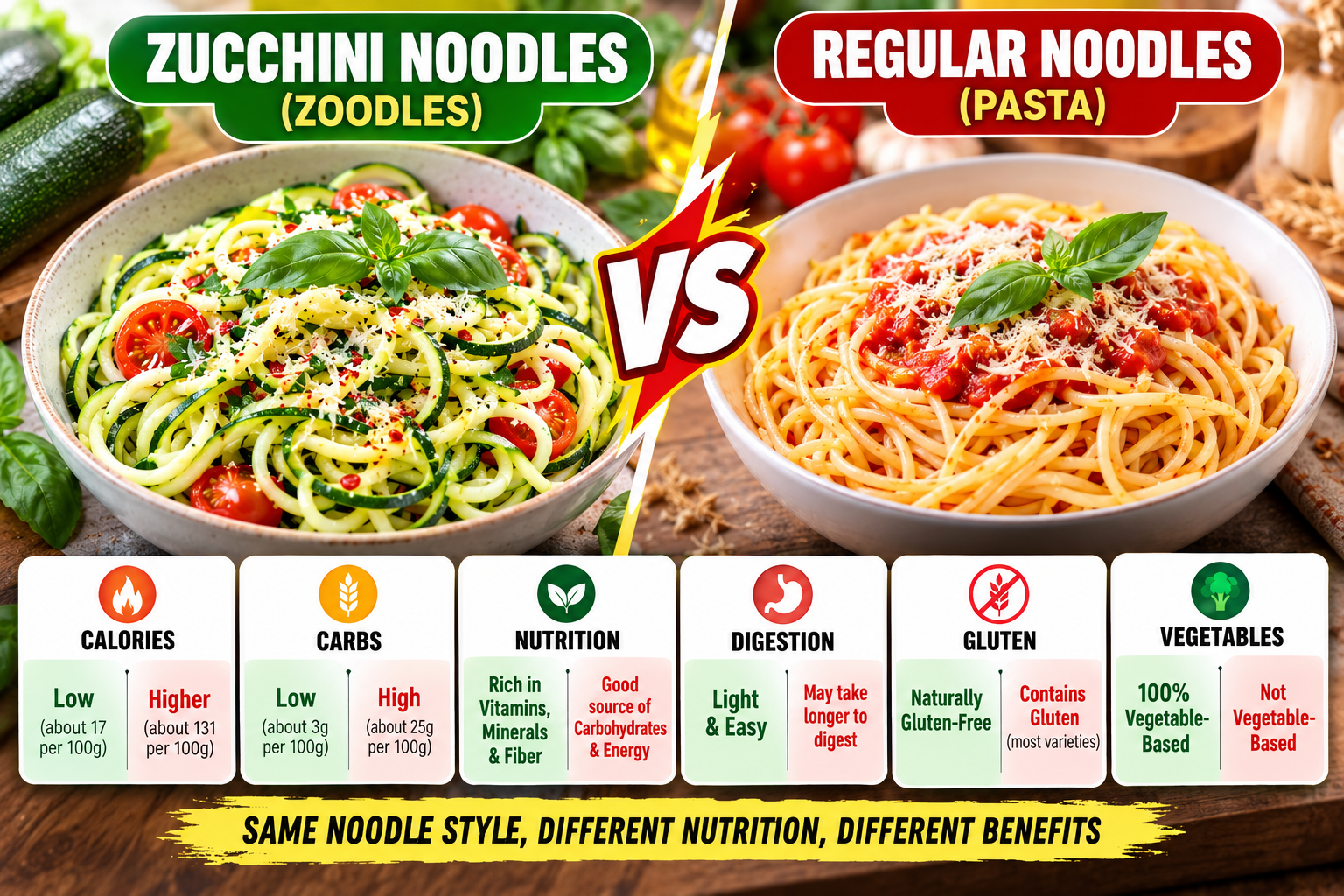
Zucchini Noodles vs Noodles: Calories, Carbs & Nutrition Compared – 2026
Zucchini noodles vs noodles: compare calories, carbs, nutrition, taste, texture, cooking, weight-management uses, gluten considerations and more to find the right option for your meal.
Zucchini Noodles vs Noodles: What’s the Difference?
When you want a comforting bowl of noodles but also want to include more vegetables in your meal, zucchini noodles vs noodles becomes an interesting comparison.
Traditional noodles have been part of cuisines around the world for generations. Depending on the variety, they may be made from wheat, rice, buckwheat, eggs, starches, legumes or other ingredients.
Zucchini noodles are completely different.
Often called zoodles, zucchini noodles are simply zucchini cut into long, thin strands that resemble noodles or spaghetti.
The two foods may look similar on a plate, but their nutritional composition, taste, texture, preparation and culinary uses can be very different.
Zucchini noodles generally contain more water and substantially less carbohydrate than conventional wheat-based noodles. Traditional noodles, meanwhile, usually provide a firmer texture and greater energy density and can be a significant source of carbohydrates.
Neither option needs to be treated as universally “good” or “bad.”
The better choice for a particular meal depends on your dietary needs, preferences, activity level, health goals, recipe and appetite.
This detailed zucchini noodles vs regular noodles comparison explains the major differences so you can decide which option makes sense for you.
What Are Zucchini Noodles?
Zucchini noodles are strands of fresh zucchini shaped to resemble conventional noodles.
They are commonly known as zoodles.
Instead of preparing dough from flour and water, you take a fresh zucchini and cut it into noodle-shaped strands.
Several kitchen tools can be used, including:
- Spiralizer
- Julienne peeler
- Vegetable peeler
- Mandoline
- Sharp kitchen knife
A spiralizer typically produces the classic spaghetti-like appearance.
Zucchini noodles can be served raw or lightly cooked. Because zucchini contains a considerable amount of water, zoodles usually require much less cooking than traditional dried noodles.
What Are Regular Noodles?
“Noodles” is a broad category rather than one specific food.
Different types can include:
- Wheat noodles
- Egg noodles
- Rice noodles
- Soba noodles
- Udon
- Ramen-style noodles
- Pasta
- Glass noodles
- Whole-wheat noodles
- Legume-based noodles
Their nutritional values can vary considerably.
For the purposes of a general zucchini noodles vs noodles comparison, conventional wheat-based noodles or pasta provide the most useful reference point.
However, always check the nutrition label of the exact product you eat if precise nutritional information matters to you.
Zucchini Noodles vs Regular Noodles: Quick Comparison
Here is the fundamental difference:
| Feature | Zucchini Noodles | Traditional Noodles |
|---|---|---|
| Main ingredient | Zucchini | Usually flour/grain/starch |
| Vegetable-based | Yes | Usually no |
| Carbohydrate density | Low | Usually higher |
| Water content | High | Lower after preparation relative to zucchini |
| Texture | Light, tender, slightly crisp | Usually firmer and chewier |
| Flavor | Mild vegetable flavor | Neutral to grain-like |
| Cooking time | Very short | Depends on noodle type |
| Naturally gluten-free | Plain zucchini is | Depends on noodle ingredients |
| Can be eaten raw | Yes | Most conventional noodles require cooking |
| Best use | Vegetable-forward meals | Traditional noodle and pasta dishes |
The exact nutritional values of conventional noodles vary by type, brand, ingredients and serving size.
Zucchini Noodles vs Noodles: Calories
One of the most searched questions about zoodles vs noodles concerns calories.
Zucchini itself is a relatively low-calorie vegetable because much of its weight consists of water.
Traditional noodles are typically much more energy-dense because they are commonly made from flour, grains or starch.
This means that replacing a portion of conventional noodles with zucchini can reduce the calorie density of a dish.
However, there is an important catch.
The sauce matters.
A bowl of zucchini noodles covered in large quantities of cream, butter, cheese and oil can contain considerably more calories than the zucchini itself.
Likewise, a thoughtfully portioned traditional noodle dish with vegetables and lean protein can form part of a balanced diet.
Therefore, comparing only the noodles doesn’t tell you everything about the final meal.
Zucchini Noodles vs Noodles: Carbohydrates
The carbohydrate difference is one of the clearest distinctions.
Zucchini naturally contains relatively little carbohydrate compared with conventional wheat or rice noodles.
Traditional noodles are commonly made from carbohydrate-rich ingredients such as:
- Wheat flour
- Rice
- Semolina
- Starches
Consequently, conventional noodles generally contain considerably more carbohydrate per comparable serving than zucchini.
This is why zoodles are frequently used in lower-carbohydrate recipes.
If reducing carbohydrate intake is important for a medical reason, however, individual dietary decisions should be discussed with an appropriate healthcare professional or registered dietitian.
Zoodles vs Noodles: Nutrition
Looking beyond calories and carbohydrates gives us a more useful comparison.
Zucchini Noodles
Zucchini contributes:
- Water
- Fiber
- Vitamin C
- Potassium
- Other vitamins, minerals and plant compounds in varying amounts
Because zoodles are essentially fresh zucchini, their nutritional profile is that of the vegetable itself.
Traditional Noodles
The nutritional profile depends heavily on the type.
Depending on their ingredients, noodles may provide:
- Carbohydrates
- Protein
- Fiber
- Iron
- B vitamins
- Other nutrients
Whole-grain or legume-based noodles can have a different nutritional profile from refined wheat noodles.
Therefore, “zucchini noodles vs noodles nutrition” isn’t a simple case of one food containing nutrients and the other not.
They provide different nutritional benefits.
Zucchini Noodles vs Pasta
Although noodles and pasta are technically broad categories, many people searching for zucchini noodles are specifically comparing them with spaghetti.
Zucchini noodles can imitate the shape of spaghetti very effectively.
But they do not behave exactly like pasta.
Pasta provides:
- Dense texture
- Chewy bite
- More carbohydrate
- Greater energy density
- Strong sauce-holding ability
- Traditional pasta experience
Zucchini noodles provide:
- Fresh vegetable texture
- High water content
- Lower carbohydrate density
- Lower energy density
- Quick preparation
- An easy way to incorporate zucchini into a meal
For some people, the best solution isn’t choosing one or the other.
It is combining them.
Half Zoodles, Half Pasta: An Excellent Middle Ground
If you enjoy pasta but want more vegetables, try combining conventional noodles with zucchini noodles.
For example:
50% spaghetti + 50% zucchini noodles
This approach can preserve much of the familiar pasta texture while increasing the proportion of vegetables in your meal.
It can also help people who find a complete switch from traditional noodles to vegetables too dramatic.
This method works particularly well with:
- Marinara
- Pesto
- Garlic and olive oil
- Tomato basil sauce
- Chicken pasta
- Shrimp pasta
It is also a practical way to introduce zucchini noodles to children or family members who prefer conventional pasta.
Zucchini Noodles vs Noodles for Weight Management
Zucchini noodles are frequently associated with weight-loss diets because zucchini is less energy-dense than conventional pasta.
Replacing some traditional noodles with zucchini may help reduce the calorie density of a meal while increasing vegetable volume.
However, it is important to avoid oversimplification.
Zucchini noodles do not automatically cause weight loss.
Body weight is influenced by overall dietary intake, activity, individual physiology, sleep, medical factors and other variables.
The toppings matter as well.
A large quantity of calorie-dense sauce can substantially change the nutritional profile of a zoodle meal.
For weight-conscious meals, consider pairing zucchini noodles with:
- Vegetables
- Tomato-based sauces
- Herbs
- Lean proteins
- Beans
- Tofu
- Moderate portions of healthy fats
Zucchini Noodles vs Noodles for Low-Carb Meals
For people intentionally reducing carbohydrate intake, zucchini noodles can be useful.
The primary ingredient is zucchini rather than grain flour or starch.
Popular low-carb zoodle combinations include:
- Zucchini noodles with chicken
- Zoodles with shrimp
- Zucchini noodles with pesto
- Garlic Parmesan zoodles
- Zoodles with tomato sauce
- Zucchini noodles with mushrooms
- Zoodles with eggs
- Zucchini noodles with tofu
Remember that sauces and toppings contribute carbohydrates too, so consider the complete dish.
Zucchini Noodles vs Noodles for Keto-Style Meals
Zucchini is commonly used in ketogenic-style recipes because it contains relatively little carbohydrate compared with conventional pasta.
Traditional wheat noodles generally contain considerably more carbohydrate.
That makes zucchini noodles a common substitute in recipes designed to fit lower-carbohydrate eating patterns.
Whether a complete dish fits an individual’s specific carbohydrate target depends on portion sizes and every ingredient used.
Zucchini Noodles vs Noodles for Gluten-Free Diets
Plain zucchini noodles are naturally gluten-free because zucchini does not contain gluten.
Traditional noodles are more complicated.
Wheat-based noodles contain gluten, but many gluten-free noodle alternatives exist, including products made from:
- Rice
- Corn
- Legumes
- Certified gluten-free grains
- Certain starches
Anyone with celiac disease or another medical need for strict gluten avoidance should also consider preparation practices and cross-contact, not just the main ingredient.
Zoodles vs Noodles: Taste
This is where personal preference becomes especially important.
Traditional noodles usually have a mild flavor that allows sauces to dominate the dish.
Zucchini noodles also have a relatively mild taste, but you can still tell that you are eating a vegetable.
Fresh zucchini can have a slightly sweet, clean and vegetal flavor.
When paired with flavorful ingredients such as garlic, basil, tomato, pesto, Parmesan, lemon or chili, the zucchini flavor blends easily into the dish.
Zucchini Noodles vs Regular Noodles: Texture
Texture may be the biggest practical difference.
Traditional noodles can be:
- Firm
- Chewy
- Springy
- Dense
- Al dente
Zucchini noodles are generally:
- Softer
- Juicier
- Lighter
- More delicate
- Slightly crisp when minimally cooked
Overcooking zucchini makes the difference even greater.
Zoodles can quickly become soft and watery.
This is why proper cooking technique matters.
Which Tastes Better: Zoodles or Noodles?
There is no objective winner because taste is personal.
If you want the traditional experience of spaghetti, conventional pasta will provide a closer match.
If you enjoy fresh vegetables and lighter textures, zucchini noodles may be more appealing.
For many people, the ideal approach is to treat zucchini noodles as their own ingredient rather than expecting them to taste exactly like pasta.
How to Make Zucchini Noodles Taste More Like a Complete Meal
Because zucchini has a mild flavor, the surrounding ingredients are important.
Consider adding:
Garlic
Fresh garlic provides strong aroma and savory flavor.
Olive Oil
A small amount can help carry flavors throughout the dish.
Parmesan
Adds saltiness and umami.
Pesto
Pairs exceptionally well with zucchini.
Tomato Sauce
Creates a familiar pasta-style experience.
Fresh Herbs
Basil, parsley and oregano work particularly well.
Chili Flakes
Useful when you want extra heat.
Lemon
Acidity can brighten the entire dish.
How to Make Zucchini Noodles
Making zoodles at home is simple.
You Need:
- Fresh zucchini
- Spiralizer or alternative cutting tool
- Clean towel
- Skillet if cooking
Step 1: Wash the Zucchini
Clean the zucchini thoroughly and dry it.
Step 2: Trim the Ends
Remove both ends.
Step 3: Spiralize
Place the zucchini into a spiralizer and create long strands.
Step 4: Manage Moisture
Gently pat the noodles dry if necessary.
Step 5: Cook Briefly
Sauté only until the desired texture is reached.
Step 6: Add Sauce
For better moisture control, add the sauce near the end or immediately before serving.
How to Make Zucchini Noodles Without a Spiralizer
A spiralizer is convenient but unnecessary.
You can make zoodles using a:
- Julienne peeler
- Vegetable peeler
- Mandoline
- Sharp knife
A vegetable peeler creates broad ribbons resembling pappardelle.
A julienne peeler creates thinner noodle-like strips.
A knife requires more patience but works perfectly well.
How to Cook Zucchini Noodles Without Making Them Soggy
Watery zoodles are one of the most common complaints.
Zucchini naturally contains a lot of water, and heating it releases some of that moisture.
To improve the texture:
Don’t Overcook
Cook zucchini noodles briefly.
Use a Large Pan
A larger surface area helps moisture evaporate.
Avoid Overcrowding
Too much zucchini in a small skillet encourages steaming.
Dry Before Cooking
Pat freshly spiralized zucchini gently with a clean towel.
Add Salt Carefully
Salt encourages vegetables to release moisture.
Prepare Sauce Separately
A separate sauce gives you greater control over consistency.
Serve Immediately
Zoodles can continue releasing water while sitting in sauce.
Can You Eat Zucchini Noodles Raw?
Yes.
Unlike most traditional dried noodles, zucchini noodles can be eaten raw.
Raw zoodles have a crisp texture that works especially well in salads.
Try combining them with:
- Cherry tomatoes
- Fresh basil
- Olive oil
- Lemon
- Avocado
- Feta
- Nuts
- Seeds
- Pesto
Raw zoodles can be especially refreshing during warm weather.
Zucchini Noodles vs Egg Noodles
Egg noodles are traditionally made with flour and eggs, although recipes and commercial products vary.
Compared with zucchini noodles, egg noodles generally provide a denser, more traditional noodle texture.
Zoodles are vegetable-based and contain substantially more water.
Choose based on the meal you’re creating rather than assuming they are nutritionally interchangeable.
Zucchini Noodles vs Rice Noodles
Rice noodles are generally made primarily from rice flour and water, sometimes with additional starches.
They are widely used in Asian cuisines.
Compared with zucchini noodles, rice noodles usually:
- Have more carbohydrate
- Are more energy-dense
- Have a firmer noodle texture
- Work differently in soups and stir-fries
Zucchini noodles can still be used in Asian-inspired recipes, particularly when paired with ginger, garlic, sesame and soy-based sauces.
Zucchini Noodles vs Whole-Wheat Noodles
Whole-wheat noodles provide a different nutritional profile from refined noodles.
They may provide more fiber and retain more components of the grain.
Zucchini noodles, meanwhile, are a vegetable.
This is an important reminder that the comparison doesn’t have to be framed as one food being universally superior.
They serve different nutritional and culinary purposes.
Zucchini Noodles vs Shirataki Noodles
Shirataki noodles and zucchini noodles are both commonly discussed as alternatives to conventional pasta, but they are very different foods.
Zucchini noodles are made from fresh zucchini.
Shirataki noodles are traditionally produced using konjac.
Their:
- Flavor
- Texture
- Nutritional composition
- Preparation
- Storage
are different.
People looking for vegetable-based noodles may prefer zucchini, while people seeking another specialized low-carbohydrate noodle alternative may consider shirataki.
Zucchini Noodles vs Spaghetti Squash
Another popular vegetable-based pasta alternative is spaghetti squash.
After cooking, the flesh of spaghetti squash separates naturally into strands.
Zucchini must be cut or spiralized to produce noodles.
Both can be used with pasta-style sauces, but their flavor and texture differ considerably.
Zucchini Noodles vs Noodles: Cooking Time
Zoodles are extremely quick to prepare.
Traditional noodles usually need to be boiled, although exact cooking times vary considerably.
Zucchini noodles can be:
- Eaten raw
- Lightly sautéed
- Briefly microwaved
- Added directly to hot sauce
- Baked in certain recipes
This makes zucchini noodles convenient for quick meals.
Zucchini Noodles vs Noodles: Which Is More Filling?
Satiety is influenced by more than one ingredient.
Protein, fiber, fat, meal volume and total energy intake can all influence how satisfying a meal feels.
Traditional noodles generally provide more energy and carbohydrate per comparable weight.
Zucchini provides substantial water and vegetable volume.
To create a more satisfying zucchini noodle meal, add an appropriate protein source.
Examples include:
- Chicken
- Fish
- Shrimp
- Eggs
- Tofu
- Beans
- Lentils
Adding vegetables and a suitable source of fat can also make the meal more complete.
Best Sauces for Zucchini Noodles
Zoodles work with many of the same sauces used for pasta.
Popular choices include:
Marinara Sauce
Tomato-based sauces complement zucchini particularly well.
Pesto
Basil pesto adds concentrated flavor without requiring prolonged cooking.
Garlic Butter
A simple combination for quick zoodles.
Alfredo-Style Sauce
Useful when you want a richer meal.
Lemon Garlic Sauce
Light and fresh.
Peanut Sauce
Excellent for Asian-inspired zoodles.
Sesame Ginger Sauce
A flavorful choice for vegetable noodle bowls.
Easy Garlic Parmesan Zucchini Noodles Recipe
Here is a quick recipe that demonstrates how easy zoodles can be.
Ingredients
- 2 medium zucchini
- 1 tablespoon olive oil
- 2 garlic cloves, minced
- Black pepper
- Salt
- Grated Parmesan
- Fresh parsley
- Chili flakes, optional
Instructions
- Wash and spiralize the zucchini.
- Pat the strands gently to remove surface moisture.
- Heat olive oil in a large skillet.
- Add garlic and cook briefly until aromatic.
- Add zucchini noodles.
- Toss gently for a short period.
- Season near the end of cooking.
- Remove from heat.
- Add Parmesan and parsley.
- Add chili flakes if desired.
- Serve immediately.
Chicken Zucchini Noodles
For a protein-rich meal, add cooked chicken.
Season chicken with:
- Garlic
- Black pepper
- Paprika
- Herbs
- A moderate amount of salt
Cook the chicken thoroughly, slice it and combine it with zucchini noodles.
Pesto, tomato sauce and garlic-based sauces all work well.
Shrimp Zucchini Noodles
Shrimp and zoodles make a particularly quick dinner.
Cook shrimp with garlic and olive oil until safely cooked.
Add the zucchini noodles near the end.
Finish with:
- Lemon
- Parsley
- Chili flakes
- Black pepper
Avoid prolonged cooking after adding the zucchini.
Pesto Zucchini Noodles
Pesto zoodles require very little preparation.
Simply combine:
- Fresh zucchini noodles
- Basil pesto
- Cherry tomatoes
- Parmesan
- Fresh basil
You can add grilled chicken, shrimp, tofu or roasted vegetables for a more substantial meal.
Zucchini Noodles vs Noodles for Children
Children may notice the difference in texture immediately.
Rather than presenting zucchini as identical to spaghetti, consider combining the two.
For example:
75% regular noodles + 25% zoodles
Then, if desired:
50% noodles + 50% zoodles
This preserves familiar texture while increasing vegetable variety.
Are Zucchini Noodles Actually a Good Pasta Substitute?
Yes—but with realistic expectations.
Zucchini noodles successfully imitate the long shape of spaghetti and work with many pasta sauces.
However, they are still zucchini.
They will not have the same:
- Chewiness
- Starchiness
- Density
- Cooking behavior
as traditional pasta.
Instead of thinking of zoodles as “fake pasta,” think of them as a vegetable noodle with its own qualities.
Advantages of Zucchini Noodles
Zoodles offer several practical benefits:
- Vegetable-based
- Naturally gluten-free in their plain form
- Lower carbohydrate density than conventional pasta
- Lower energy density
- Very quick to prepare
- Can be eaten raw
- Versatile
- Compatible with many sauces
- Useful for increasing vegetable intake
- Easy to make at home
Potential Disadvantages of Zucchini Noodles
Zoodles aren’t perfect for every meal.
Potential drawbacks include:
- Softer texture
- High water content
- Can become soggy
- Less energy-dense
- Don’t replicate traditional pasta exactly
- May not be satisfying alone for everyone
- Require fresh produce
- Can release water into sauces
Most texture problems can be improved through proper preparation.
Advantages of Traditional Noodles
Conventional noodles remain popular for good reasons.
Depending on the variety, they offer:
- Familiar texture
- Satisfying chew
- Long shelf life when dried
- Versatility
- Convenient preparation
- Excellent sauce compatibility
- Carbohydrate and energy
- Strong culinary traditions
They can absolutely fit into a balanced eating pattern.
Should You Replace All Pasta With Zucchini Noodles?
Not necessarily.
There is no requirement to eliminate traditional pasta simply because zucchini noodles exist.
You could eat:
- Traditional noodles on some days
- Zoodles on others
- A combination of both
Dietary variety can make meals more enjoyable and nutritionally diverse.
Zucchini Noodles vs Noodles: Which One Should You Choose?
Your choice can depend on what you want from the meal.
Zucchini noodles may suit a meal when you want:
- More vegetables
- Lower carbohydrate density
- Lower energy density
- A fresh texture
- A naturally gluten-free vegetable base
- Very quick preparation
Traditional noodles may suit a meal when you want:
- Classic noodle texture
- More carbohydrate
- Greater energy density
- Traditional pasta or noodle dishes
- A firmer bite
- Longer pantry storage
And when you want both benefits, combine them.
Frequently Asked Questions About Zucchini Noodles vs Noodles
Are zucchini noodles healthier than regular noodles?
They have different nutritional profiles. Zucchini noodles provide vegetables with relatively low carbohydrate and energy density, while conventional noodles can provide more carbohydrates, energy and, depending on the product, protein, fiber and micronutrients. The better choice depends on your nutritional needs and the overall meal.
Are zucchini noodles lower in calories than regular noodles?
Plain zucchini is generally much less energy-dense than conventional wheat noodles. However, sauces and toppings can significantly change the calories in the finished dish.
Are zucchini noodles lower in carbs?
Yes. Zucchini generally contains substantially less carbohydrate than conventional wheat- or rice-based noodles.
Are zoodles the same as zucchini noodles?
Yes. “Zoodles” is a common nickname for zucchini noodles.
Do zucchini noodles taste like pasta?
Not exactly. They have a mild vegetable flavor and softer texture.
Can zucchini noodles replace pasta?
They can substitute for pasta in many dishes, especially when paired with tomato sauce, pesto, garlic or other flavorful sauces.
Are zucchini noodles gluten-free?
Plain zucchini noodles are naturally gluten-free. Be careful with sauces and other ingredients if strict gluten avoidance is required.
Are zucchini noodles keto-friendly?
Zucchini is commonly used in lower-carbohydrate and ketogenic-style recipes. Whether a complete meal fits a specific ketogenic diet depends on the entire recipe and serving size.
Can I mix zucchini noodles with regular pasta?
Absolutely. Combining zoodles with traditional pasta is an easy way to add vegetables while preserving the familiar pasta texture.
Why do zucchini noodles become watery?
Zucchini naturally contains a lot of water. Salt and heat can cause that moisture to be released.
How do you keep zoodles from becoming soggy?
Cook them briefly, use a sufficiently large pan, avoid overcrowding, control salt and add sauce near serving time.
Can zucchini noodles be eaten raw?
Yes. Raw zucchini noodles work particularly well in salads and cold dishes.
Which sauce is best for zucchini noodles?
Pesto, marinara, garlic butter, tomato basil, lemon garlic and sesame-ginger sauces are all good choices.
Are zucchini noodles good for weight loss?
They can help create lower-energy-density, vegetable-rich meals, but no individual food guarantees weight loss. Overall eating patterns and lifestyle factors matter.
Are regular noodles unhealthy?
Not inherently. Different noodles have different nutritional profiles, and traditional noodles can be incorporated into balanced meals.
Final Verdict: Zucchini Noodles vs Regular Noodles
The zucchini noodles vs noodles comparison is less about declaring one food universally better and more about understanding what each brings to your plate.
Zucchini noodles are fresh, vegetable-based, naturally low in carbohydrate compared with conventional pasta, quick to prepare and useful for increasing vegetable intake.
Traditional noodles offer the familiar chewy texture many people love, provide substantially more carbohydrate and energy, and form the foundation of countless traditional dishes around the world.
If you want a vegetable-forward, lower-carbohydrate meal, zucchini noodles are a practical alternative to regular noodles.
If you need more energy, want traditional noodle texture or simply enjoy pasta, conventional noodles remain a perfectly valid option.
And you don’t have to choose one forever.
A bowl containing both traditional noodles and zucchini noodles can provide an excellent compromise between classic comfort food and additional vegetables.
Ultimately, the most useful question isn’t simply “Are zucchini noodles better than noodles?”
It is:
“Which option best fits this particular meal and my nutritional needs?”
Once you approach the comparison that way, both zucchini noodles and traditional noodles can have a place in a varied diet.
Need Help With Your Requirement?
Talk to Mithu Tech Group for a quick consultation.